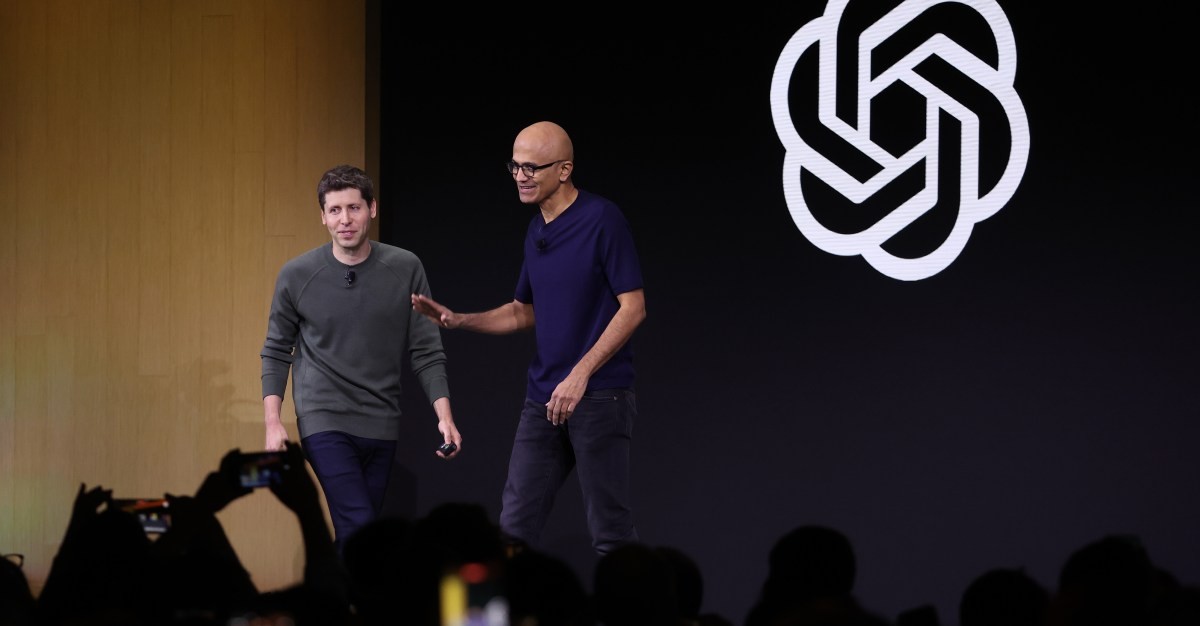
The long-standing, often turbulent partnership between Microsoft and OpenAI has undergone a fundamental transformation. In a move that signals the end of exclusivity, Microsoft has announced that OpenAI is now free to deploy its models and services across any cloud provider, including Microsoft’s fiercest rival, Amazon Web Services (AWS).
While the relationship between the two tech giants has been marked by executive friction, contract renegotiations, and strategic maneuvering, the latest update appears surprisingly amicable. Rather than a hostile breakup, this renegotiation represents a pragmatic adjustment to the rapidly evolving AI landscape. Microsoft retains significant financial upside and primary cloud status, while OpenAI gains the flexibility to reach customers wherever they are—particularly on Amazon’s Bedrock platform.
The End of Exclusivity and the Rise of Multi-Cloud AI
The core change in the agreement is the removal of exclusivity clauses that previously tied OpenAI’s products to Microsoft’s Azure cloud. This shift was catalyzed by Amazon’s $50 billion investment in OpenAI earlier this year, a deal designed to integrate OpenAI’s Frontier models into AWS. Microsoft, initially resistant to seeing its key partner collaborate with a direct competitor, had considered legal action. However, the final agreement suggests a compromise that benefits both parties financially.
Key provisions of the new deal include:
- Multi-Cloud Access: OpenAI can now offer its latest models, including Codex, on AWS and potentially other platforms like Google Cloud in the near future.
- Revenue Sharing for Microsoft: Microsoft will continue to receive 20% of the revenue OpenAI earns from ChatGPT and its API platform. Crucially, this includes a cut of revenue generated from rival cloud platforms. There is a revenue cap, but the structure ensures Microsoft profits from OpenAI’s success regardless of where the models are hosted.
- Primary Partner Status: Microsoft remains OpenAI’s “primary cloud partner,” meaning new products will launch on Azure first. However, the window for exclusivity has shrunk to minutes rather than months.
- Extended Timeline: Microsoft’s non-exclusive license for OpenAI models is extended through 2032, providing long-term stability.
- No Reverse Royalties: Microsoft no longer needs to pay 20% of its Azure OpenAI revenue back to OpenAI. Additionally, Microsoft is exempt from revenue sharing if its search and news advertising revenue grows by 15% year-over-year.
The removal of exclusivity marks a shift from a closed, vertical integration strategy to a more open, horizontal one. Microsoft is betting that its financial stake and primary partner status will outweigh the competitive disadvantage of rivals hosting OpenAI models.
Why This Matters: The AGI Clause and Strategic Independence
A critical, though less publicized, aspect of this renegotiation is the removal of the Artificial General Intelligence (AGI) clause. Previously, the agreement stipulated that Microsoft would lose access to OpenAI’s most advanced models once AGI was achieved. This clause had been a source of tension for over a year, contributing to disputes over acquisitions (such as the failed Windsurf deal) and OpenAI’s restructuring.
By removing this clause, Microsoft secures access to future advanced models without the threat of being locked out upon the theoretical arrival of AGI. Conversely, OpenAI is no longer incentivized to prematurely declare AGI to escape the contract. This change stabilizes the partnership’s long-term trajectory, moving it away from existential leverage plays toward a more predictable commercial relationship.
Furthermore, Microsoft is actively reducing its dependency on OpenAI by developing its own models and diversifying its AI portfolio. The company has made strides with models like MAI-Transcribe-1 for speech recognition and is increasingly integrating models from Anthropic (such as Claude) and considering Google’s Gemini for specific enterprise tasks. This “best model for the job” approach allows Microsoft to serve enterprise customers with a broader suite of AI tools, mitigating the risk of relying solely on OpenAI.
Microsoft Gaming Rebrands: “We Are Xbox”
In a separate but significant organizational shift, Microsoft is reversing its 2022 rebranding of the Xbox division. Xbox CEO Asha Sharma announced to employees that “Microsoft Gaming” is returning to simply Xbox. This change coincides with a renewed focus on player engagement and hardware.
Key developments in the Xbox division:
- Identity Restoration: The “Microsoft Gaming” label, introduced during the Activision Blizzard acquisition, is being scrapped. Sharma emphasized, “Xbox needs to be our identity,” aiming to rally employees around a clear brand vision.
- New Leadership Vision: Sharma and Xbox Chief Content Officer Matt Booty issued a memo titled “We Are Xbox,” prioritizing daily active players, hardware, content, experience, and services. This signals a potential shift in strategy following recent revenue declines.
- Visual Rebranding: A new, glassy Xbox logo has been introduced internally and on campus, alongside slogans like “Great Games” and “Future of Play.”
- Financial Context: Microsoft’s Q3 2026 fiscal earnings revealed a 7% drop in overall gaming revenue, with hardware sales down 33%. Sharma acknowledged that “player and revenue growth has not yet met our ambition,” highlighting the urgency of the strategic reset.
Product Updates and Infrastructure Challenges
Beyond strategic partnerships, Microsoft continues to refine its core products and manage infrastructure reliability:
- Windows Update Flexibility: Windows 11 users can now pause updates indefinitely, in 35-day increments. This change addresses user frustration with forced restarts during critical tasks, offering greater control without disabling updates entirely.
- GitHub Reliability and Security: GitHub faced significant outages last week, including a bug that reverted merged commits. While these incidents highlight scaling challenges amid increased AI-driven development workflows, the team demonstrated rapid response capabilities by fixing a critical vulnerability in less than six hours.
- Copilot Billing Change: Starting in June, GitHub Copilot will move to a usage-based billing model. Plans will include a monthly allotment of AI credits, with additional usage charged based on token consumption. This shift aims to align costs with actual usage but may raise concerns for high-volume developers.
- Xbox-Discord Partnership: A leak suggests a new “Starter Edition” of Xbox Game Pass will be bundled with Discord Nitro, offering access to over 50 games and 10 hours of cloud gaming per month. This move expands Xbox’s reach into the gaming community via Discord’s platform.
- Hardware Integration: Logitech has released productivity plugins for its MX Creative Console, allowing users to control Microsoft Office applications (Word, Excel, PowerPoint) via customizable buttons, streamlining workflows for creative professionals.
Conclusion
The updated Microsoft-OpenAI deal marks a maturation of their partnership, transitioning from exclusive dependency to a flexible, revenue-sharing alliance that accommodates multi-cloud competition. For Microsoft, this reduces strategic risk while maintaining financial upside, allowing it to diversify its AI offerings with partners like Anthropic and Google. Simultaneously, the rebranding of Xbox reflects a focused effort to rebuild player trust and reverse recent revenue declines. Together, these moves illustrate Microsoft’s broader strategy: balancing aggressive innovation with pragmatic adjustments to a rapidly changing technological landscape.