You are sitting in a bubble of invisible noise right now. It isn’t silent. It isn’t empty. The air is saturated with radio waves, a chaotic ocean of electromagnetic chatter zipping past your skin whether you notice it or not.
Think about your car stereo. You flip it to AM or FM and pull in dozens of stations. You switch to CB radio and get 40 more channels. Turn on a TV and you’re bathing in broadcast signals. Your cell phone? It’s bouncing hundreds of frequencies back and forth every second. But that’s just the tip of the iceberg.
Literally tens of thousands of other conversations are happening around you as you read this. Police officers dispatching units. Firefighters coordinating a response. Ambulance drivers on the move. Paramedics talking to hospitals. Sanitation workers scheduling pickups. Even astronauts in space and race car drivers on the track are broadcasting. And yes, even babies on monitors are using these waves. They are all talking. You just can’t hear them.
To tap into this ocean and actually listen to what’s going on, you need a radio scanner.
What Is a Radio Scanner?
A scanner is essentially a specialized radio receiver designed to pick up multiple signals across various bands. While standard radios tune into specific stations you choose, scanners are built to hunt. They generally operate in the VHF (Very High Frequency) to UHF (Ultra High Frequency) range, though the exact capabilities depend on the model and local regulations.
These devices are surprisingly portable and affordable. You don’t need a ham radio license to listen to most public safety communications, provided you aren’t trying to decode encrypted police or military traffic. For the average hobbyist, the goal is simply to hear the unencrypted airwaves that make up the background hum of modern life.
How Scanner Modes Work
Understanding how to operate a scanner is key to making it useful. Most units offer three primary modes. Knowing which one to use can mean the difference between hearing a interesting dispatch and just hearing static.
Scan Mode
This is the default state for most scanners. The receiver automatically cycles through a list of preprogrammed frequencies. It moves quickly, looking for a carrier signal—a frequency where someone is actually talking.
When it finds an active frequency, it stops. A light on the panel or a display will show you the channel number or the exact frequency. The audio plays through the speaker. When the transmission ends, the scanner waits a few seconds to ensure the conversation is over, then jumps to the next frequency. You can preprogram specific channels you’re interested in (like local police or fire) or set it to scan the entire band.
Manual Scan
Sometimes you want control. In manual scan mode, you take the wheel. You press a button or turn a dial to step through frequencies one at a time. This is useful if you suspect a specific frequency is active but don’t want the scanner to automatically skip past it. It’s slower, but it gives you a granular view of the spectrum.
Search Mode
Use this when you’re in the dark. Maybe you moved to a new area and don’t know which frequencies local emergency services use. Or maybe you’re tracking a specific type of transmission but don’t have a frequency list.
Search mode tells the scanner to sweep between two set points within a given band. It’s like a metal detector for radio waves. It scans the empty space between two known frequencies. If it finds an active signal, it stops. If that frequency catches your interest, you can store it. From then on, it becomes part of your regular scan list.
The real magic of a scanner isn’t just hearing the voices; it’s realizing how much coordination happens in your immediate vicinity without you ever knowing
Beyond the Basics: What Modern Scanners Really Do
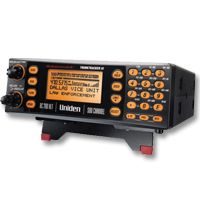
You can use a portable scanner with a rechargeable battery or a desktop unit that plugs into the wall. They are becoming more and more popular, and for good reason. Look at NASCAR races. Fans hear crew chiefs talking about strategy, drivers complaining about handling, and race management giving instructions. It’s not just the frequency. A single race involves hundreds of them. Each team has two or three channels. Race directors, medical teams, firefighters and racetrack officials all have their own points on the spectrum.
Some newer models can track municipal and police traffic in the 800 megahertz range.This is called trunk tracking. These networks are computer-controlled, and the scanners must stay on changing channels to keep up a conversation.
The host unit communicates with the PC via the serial port. Special software can also be used to log stations and mirror the scanner’s controls on the screen.
Many models also receive NOAA weather broadcasts. This feature isn’t just nice to have during a tornado or hurricane. It is essential.
Controls you should know about
These buttons vary by brand, but most scanners have the following key functions:
- Volume : Self-explanatory.
- Squelch : Adjust the static threshold. Mute the speaker when no station is transmitting. It works regardless of whether you’re scanning, searching, or manually scrolling through stored frequencies. CB radios use the same logic.
- WX button : Common to new models. This will initiate a small scan at the factory-preset frequencies for national NOAA weather forecasts.
- Numeric keypad : Used to enter frequencies directly. Combine this with the Limits button to set upper and lower limits for your search. You can also enter the desired frequency while searching. More expensive models save these automatically. 这些点手机は「Police Calls」のオームを手机るる、オンラインでさんますまくををチェースをチェハクUseful Book Scanners and Secret Frequencies by Henry L. Eisenson and Bill Cheek. Thanks to the frequency synthesizers, most scanners cover frequencies from 29 MHz to 512 MHz. If you enter a frequency outside this range, an error may be displayed. High-end scanners often have a higher coverage range, and in some cases, the bandwidth of the military aircraft bands is also included. Early scanners did not have keyboards. Separate crystals had to be purchased for each channel. Some models only had 6 or 10
crystals.
Buying enough crystals to fill the memory often costs as much as the scanner itself. It’s like buying cheap printer ink cartridges.
– Search button : Searches for continuous loops between two frequency limits of an unknown signal. The application process follows Federal Communications Commission (FCC) band additions. US scanners cannot scan analog cell phone frequencies. In the competition, you can apply with the frequency 460 – 470 MHz. Notice where the scanner stops. The race program might list the assigned frequencies anyway. Enter or save the number. Please keep searching. The manual usually tells which frequency ranges belong to government, commercial, aviation, etc.
– Manual button : Scroll through the saved frequencies one by one.
Modern scanners have a built-in memory that can store 100-300 channels. Premium models can hold even more.
– Scan button : Loops all frequency banks. The scanner stops when it detects a signal at the stored frequency. It moves on when the transmission ends. In general, you can enable or disable specific banks. Each bank holds 10 to 30 frequencies depending on the model. Banks are typically classified by type of service, such as emergency, police, fire, aviation, marine and business.
– Delay button : Holds the scanner frequency for a short time before continuing. It helps you capture the second part of a conversation.
– Lockout button : Temporarily removes a frequency from the scan cycle. Use this feature if the airport tower is full and you want to hear the traffic helicopters instead.
Hardware and limitations
The scanner comes with a small whip antenna, but it also has an external antenna connector. Use external antenna or attic antenna to hear more transmissions from further away.
Scanners don’t hear everything. Consumer units cannot receive 900 MHz cordless phones that use Digital Spread Spectrum (DSS) technology. Analog cell phone frequencies are also blocked by law in all scanners.
Some law enforcement agencies use audio inversion and other scrambling methods to hide sensitive communications. You won’t be able to decipher those conversations.
Still, there are a surprising number of radio services that operate on frequencies that most scanners can hear. You just need to know where to look.
您无需花费数百美元购买手持收音机即可开始收听当地的紧急通讯情况。 最简单的切入点是使用网络控制的接收器。 这些在线工具可让您从浏览器调整到活动频率,让您在使用物理硬件之前感受噪音、代码和整体氛围。
了解徽章的语言
当收听警察频段时,您首先注意到的事情之一就是速记。 警员经常使用 **10代码 ** 进行通信,该系统旨在在拥挤的信道上保持简短而清晰的传输。
警官可能不会说“我需要支援”或“我需要援助”,而是会发送“10-4”表示确认,或发送“10-33”表示紧急通讯。 虽然具体含义可能因地区和部门而异,但这些代码是您将听到的大部分对话的支柱。 在线收听可以帮助您实时解码这种语言,将充满静电噪音的杂乱内容转化为可理解的调度和响应叙述。
Why start with web controls?
Buying a scanner is a commitment. You must understand local laws regarding frequencies, antennas and surveillance. A network controlled receiver removes this friction. Ideal for applications such as:
- Test local events: Before buying a device, check if there is something worth listening to in your area.
- Learn to code: Get to know the rhythm and terminology without the stress of live events.
- Verified Source: Some online streaming devices are hand-picked or community-run and offer cleaner content than what cheaper handhelds get from radio.
This is a low-risk way to see if you are interested in the hobby. If you are interested in data flow, you can start researching specific scanner models. If not, you just spent a few minutes clicking.
“Noise is part of the experience. You learn to filter out the silence and focus on the bursts of activity.”
The digital age has made public safety communication easier than ever. Whether you’re a true crime buff, a local reporter, or just curious about what’s going on in your neighborhood, these online tools provide a window into the day-to-day operations of law enforcement. This is not about eavesdropping; it’s about understanding the infrastructure that keeps your community running.
Start using the scanner
Finding a frequency list for a specific area is easy. In most cases, you can get free stuff online without any hassle.
If you choose a portable device, park it near the airport. When you tune into the VHF AM flight frequency band (approximately 118 MHz to 135.975 MHz), you can hear ground traffic controllers’ conversations and pilots’ communications in your ears. In some areas, connecting to 123.95 MHz allows you to directly hear what pilots are saying in the air.
Most desktop scanners run on 12 volts. Quickly transforms into a road tool with a simple cigarette lighter.
Community Service with a Scanner
扫描仪不仅仅适合爱好者。 他们帮助执法部门抓捕罪犯。
假设这样一个场景:您在警察频道听到抢劫案的描述。 您在附近发现了嫌疑人的汽车。 你打电话过去。坏人因为你在听而被抓住。
或者你可能听到犯罪分子正在策划什么事情。 你向当地警方举报。
消防员、急救人员和警察的家人经常让扫描仪保持运行。 他们想知道他们所爱的人发生了什么事。
但有一个问题。 一些用户因使用扫描信息谋取个人利益而受到批评。 这是非法的。 遵守法律。
加入邻里守望活动。 为了安全起见,请使用该信息。 不是为了跟踪。
通过互联网收听
想尝试扫描但不想购买硬件? 使用 PC 的声卡。
各个站点都会直播警察、消防、铁路和航空音频。 它很便宜。 这是可以访问的。
接待可能会出现问题。 网络拥塞会导致流终止。 但这是在投入现金之前试水的一种低风险方式。
Scanner tips
Buy a scanner. Read the user manual. Cover to cover.
You need to know what it does.
Join our online community. The USENET newsgroups rec.radio.scanner and alt.radio.scanner are still active. Easy access from your browser. Ask questions. Learn.
Then try the following steps:
-
Collect frequencies. Use index cards or a simple database. Search 1 MHz segment at a time. Record the interesting stuff you find.
-
Power backup. If you have a desktop model, connect it to a small 12 volt battery. When the power goes out, listen to the police and fire department. Is bad weather coming? you’re still listening
-
Bank your frequencies. Group similar channels. Do you want the police? Only scan police banks. Lock out fire and EMS. Reduce clutter. Results are faster.
-
Travel with it. Listen from hotel rooms. new environment. A new soundscape.
-
Hit sporting events. Many venues use radios for security and operations.
-
** Listen to amateur radio. ** The frequency range 144-148 MHz is intended for use by amateur operators. Volunteer observers often issue weather warnings. Something useful.
More information about scanners and related technologies can be found in the links on the following pages.
Internet Radio Scanning
– Police Scanner Audio Feeds
– Police and Fire Radio Scanners
Read more
更多信息
Related HowStuffWorks Articles
- 无线电频谱的工作原理
- 无线电的工作原理
- 业余无线电的工作原理
- CB 无线电天线如何工作?
- 有人能听到我的婴儿监视器吗?
- 手机的工作原理
- 无绳电话如何工作
- 雷达探测器的工作原理
- 无线电控制玩具的工作原理
More attractive links
- Getting Started in Radio Monitoring
- New Scanner Users FAQ
- 10-codes
- Stupid scanner tricks
- Bearcat Scanner Frequencies & Codes