Let’s be honest. If you define Microsoft just by the code it sells, you’re missing the point. It’s not just a software vendor. It’s an empire. A monolith. The kind of company whose products are humming inside nearly every computer you’ll ever touch, and arguably still climbing toward the peak of its global influence.
It’s a love-hate relationship we all have. You might mutter about the “evil empire” when your blue screen of death appears or when you’re forced to buy another subscription upgrade. But strip away the frustration, and you’ll find the truth: no one powers IT like Microsoft. Bill Gates didn’t just build a business; he built the operating system for the information age. From that first IBM PC in 1981, stuffed with MS-DOS, Microsoft defined how we interact with machines.
So, what’s the deal? Why does it matter? And how did it get so big?
How Microsoft Dominates the Tech Landscape
We need to talk about how this happened. It wasn’t luck. It was a mix of cunning, innovation, and stubborn determination. Microsoft didn’t just ride the wave of the personal computer revolution; it steered the ship.
The Business Model That Changed Everything
Think about your last purchase. If you bought a PC, you likely paid Microsoft for Windows. If you work in an office, you’re using Office. If you’re developing software, you’re probably using Visual Studio. This isn’t a coincidence. It’s a strategy.
Microsoft mastered the art of ubiquity. They ensured their software was the default. Not because it was always the best, but because it was everywhere. And in tech, everywhere wins.
Corporate Culture: Why It Works
You can’t understand Microsoft without understanding its culture. It’s a machine. A well-oiled, sometimes ruthless, always effective machine. The culture rewards ambition. It punishes complacency. This isn’t a bad thing. In a market as cutthroat as software, it’s necessary.
“Microsoft defined how we use computers since the first IBM PC rolled out in 1981.”
This isn’t just marketing speak. It’s history. The company has evolved from a single-product startup to a diversified tech giant. And it’s still growing.
What Microsoft Actually Does
So, what does Microsoft do?
- Operating Systems: Windows. The backbone of personal computing.
- Productivity Software: Office. Word, Excel, PowerPoint. The tools of the modern workplace.
- Cloud Computing: Azure. The engine powering millions of apps and websites.
- Hardware: Surface. Laptops and tablets that compete with Apple and others.
- Gaming: Xbox. A major player in the console wars.
Each of these divisions feeds the others. Windows drives demand for Office. Office drives demand for Azure. Azure drives demand for cloud-based games. It’s a ecosystem. A self-reinforcing loop of revenue and relevance.
Why It Matters to You
You might not think about it, but Microsoft affects your daily life. When you boot up your computer, you’re interacting with Microsoft. When you send an email, you’re likely using Outlook. When you search the web, you’re using Bing (even if you don’t know it). When


The $50,000 Bet That Built an Empire
The myth of Microsoft starts in a garage, just like Apple’s. But while Jobs and Wozniak were wiring circuit boards, Gates and Allen were playing a different game. They didn’t build the hardware. They didn’t care about the box. They cared about the code inside it.
This distinction mattered.
Most early computer pioneers were hobbyists. They hung out in groups like the Home Brew Computer Club, treating computing like a social club or a 1960s protest movement. Gates and Allen? They were businessmen in suits. They didn’t see a market; they saw a battlefield. The rule was simple: if someone else had a product you needed, you either bought it or crushed them.
Their first major kill was DOS, the Disk Operating System. But the path to that victory was messy.
IBM was building its first personal computer. They needed an operating system. They called Microsoft, assuming Gates had one ready to hand over. He didn’t. Microsoft wrote languages, not full operating systems. Gates pointed IBM toward Digital Research’s CPM, the industry standard at the time.
Then things went sideways.
IBM’s corporate suits clashed with Digital Research’s counter-culture vibe. Negotiations broke down. The deal was nearly dead. The IBM PC was going to be a non-starter.
Microsoft stepped in.
Gates and Steve Ballmer saw an opening. They bought an operating system called QDOS for $50,000. They cleaned it up, branded it as MS-DOS, and sold it to IBM for $80,000.
In 1980, $80,000 sounds like a lot. In the grand scheme of tech, it was pocket change.
Why did Gates accept such a small payout? He was thinking decades ahead. During a PBS documentary called Triumph of the Nerds, Gates revealed the trap he had set. The contract allowed Microsoft to license the software to other companies. IBM owned the hardware, but Microsoft owned the rights to the OS for everyone else.
It was a masterstroke.
Gates knew that IBM’s entry would legitimize personal computers. It would create a mass market. And in that market, compatibility was king. Any company making a clone of the IBM PC needed an operating system that worked just like IBM’s. That meant paying Microsoft.
Microsoft became the toll booth.
PC manufacturers couldn’t compete without DOS. They had no choice. Gates had turned software into a monopoly by controlling the standard, not the machine.
It worked.
From that point on, Microsoft didn’t just participate in the market. It dominated. The company perfected a cycle: control the platform, squeeze the competitors, and repeat. When DOS reached its limits, Microsoft didn’t stop. It pivoted to the Graphical User Interface (GUI), launching Windows.
The shift from command lines to mouse-driven screens completed the trap. IBM was left behind, a hardware manufacturer in a software world.
Next, we look at how Windows emerged from that shift and why the partnership with IBM finally shattered.
A GUI Opportunity

The Macintosh arrived in 1984 and changed everything. It wasn’t just a computer; it was the first commercially successful PC with a graphical user interface. You could point, click, and navigate without memorizing command lines. This shift didn’t just make computers friendlier. It terrified Bill Gates.
He saw the Mac as a dual threat. First, it proved that personal computing could explode beyond the niche markets IBM had carved out with DOS. Second, it showed that the operating system was the real prize. If users loved the interface, they wouldn’t care about the hardware underneath. Microsoft’s franchise was suddenly vulnerable.
The O/S/2 Betrayal
Microsoft and IBM had been working together on OS/2, a successor to DOS. The plan was simple: IBM would control the hardware, and Microsoft would provide the software. They needed something IBM’s competitors couldn’t clone.
It fell apart fast.
Gates was trying to leverage IBM’s dominance to build Microsoft’s own platform. IBM wanted to lock down the market. The partnership soured when their goals diverged completely. Microsoft was left standing alone.
Instead of retreating, Gates doubled down. He built a GUI for DOS. This decision was strategic genius. Windows didn’t just mimic the Mac. It let a thousand clones of the IBM PC become Mac-like for a fraction of the cost. The impact on the business world was seismic. A boring, obsolete machine could now look modern and feel intuitive. Microsoft had redefined the market overnight.
The Internet and the Browser Wars
Just as Windows 95 was launching, a new threat emerged. Netscape went public. The internet was no longer a curiosity. It was an open global network. The creators were altruistic, often giving their code away for free.
How does a company built on licensing fees survive an open ecosystem?
Microsoft’s answer was brute force. They bundled Internet Explorer with Windows. The resulting “browser wars” were brutally one-sided. Netscape couldn’t compete with the distribution power of Microsoft’s install base. Explorer won. The threat was neutralized.
But dominance isn’t just about product placement. It’s about capital.
The Cash Moat
Look at Microsoft’s 2005 annual report. The “Cash & Short Term Investments” line item shows nearly $38 billion. Most dominant companies hoard cash to protect their turf. They go defensive. Microsoft does the opposite.
Cash allows for instant adaptation.
When IBM was a giant, Microsoft out-maneuvered it. When Netscape was a nimble startup, Microsoft overwhelmed it with endless resources. This liquidity creates a defensive moat that competitors can’t cross. Building software is different from building airplanes or skyscrapers. You don’t need factories. You need ideas and brains. With $38 billion in the bank, Microsoft can afford to experiment, acquire, and outlast anyone who runs out of runway.
Hiring for Chaos
Cash is half the battle. The other half is organization. Gates never fully consolidated Microsoft into a rigid corporate structure. Instead, he replicated the chaotic energy of the early days.
Teams are designed to be understaffed. Managers calculate the resources needed for a project, then cut them. The result? Teams must scramble. They must improvise. If you wait for perfect conditions, you lose.
The hiring process reflects this. Microsoft looks for high-energy problem solvers. Candidates are often asked riddles. Not because riddles predict coding ability, but because they reveal how someone thinks under pressure. Can you solve a problem with incomplete information? Can you work 72 hours straight if the project demands it?
This creates a culture of intense, high-stakes problem solving. It’s exhausting. But it works.
When Empires Age
All organizations atrophy. Muscle memory fades. Charismatic founders leave. The question is whether Microsoft will buck the trend. Gates is still the visionary center. As long as he remains engaged, the company’s reign likely extends for years.
But what happens after the code is written? What happens after the profits stack up?
Gates and his wife Melinda founded the Bill and Melinda Gates Foundation in 2000. The mission is starkly different from the business side. They promote equity in global health, education, and public libraries. They support at-risk families in Washington and Oregon.
Recently, Gates pledged $258 million to fight malaria in developing countries.
The same logic that drove Microsoft to dominate the desktop now drives the foundation to dominate global health. It’s capital deployed with precision.
What’s Next?
Microsoft’s product segments continue to evolve. But the underlying engine remains the same: cash, talent, and an unwillingness to let anyone else dictate the terms of the next big thing.
The foundation’s work suggests a shift. Or perhaps, just an expansion.
We’ll have to wait and see.

Microsoft doesn’t just sell software anymore. It sells ecosystems.
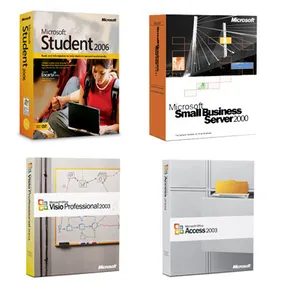
The company breaks its massive empire down into distinct “Business Units.” These aren’t just internal jargon. They are the primary product segments that investors watch closely. The list includes Client, Server & Tools, Information Worker, Microsoft Business Solutions, MSN, Mobile & Embedded Devices, and Home & Entertainment.
Each segment serves a specific slice of the global market.
The Client and Server Foundation
The Client segment is where most users first meet Microsoft. It covers the Windows operating system. This isn’t just code. It’s a platform that integrates applications, services, and hardware. The goal? Make technology easy. Make it confident.
Then there is Server and Tools. This side builds Windows Server. It keeps the enterprise backbone running. Without this, the cloud infrastructure many businesses rely on would likely fracture.
The Information Worker segment handles the productivity suite. It empowers people to turn data into impact. Think Outlook. Think Exchange. These are the tools that keep office life moving.
Business Solutions and Mobile Reach
Microsoft Business Solutions targets the financial and operational needs of companies. It manages customer relationships and supply chains. It serves small businesses just as much as it serves global enterprise divisions.
Mobile and Embedded Devices extends the Windows advantage. This segment develops products for voice-enabled phones and personal information managers. It aims to improve work and personal life through connectivity.
“MSN is responsible for delivering online services that seek to empower users by bringing them closer to the people and information that matter most to them.”
The Xbox Anomaly
The Home and Entertainment segment is complex. It handles the Xbox video game system. This includes hardware, third-party games, and Xbox Live operations. It also leads the Home Products Division.
Interestingly, this segment handles retail sales for Microsoft Office. It receives an inter-segment commission for that. It also sells Windows and PC games. It deploys Microsoft’s TV platform for the interactive television industry.
It’s a messy overlap. But it works.
The Windows Advantage
Microsoft is far from its DOS days. Windows remains its biggest seller. Part of MS Business Solutions.
Windows gives Microsoft an edge in nearly every other segment. There is one exception. Xbox.
Video games operate on their own logic. Even at the corporate level, they have a mind of their own. The rest of the empire relies on the ubiquity of Windows.
Because Windows sits on the majority of PCs, Microsoft controls the distribution channel. When it releases a new product, it doesn’t need to shout. It can update an existing system. It can place ads on Internet Explorer. Users see it before they see competitors.
The Antitrust Shadow
This dominance was once illegal in the eyes of the law.
In the old days, Microsoft’s tactics looked like anti-competitive behavior. In 2000, a federal court ordered Microsoft to break up. It mirrored the fate of Standard Oil and “Ma Bell.”
The goal was to level the playing field. Competition had grown desperate. Rivals felt suffocated by the integration of Windows and other products.
The 2000 judgment didn’t last. An appeals court overturned it.
The hope that federal power could stop Microsoft collapsed along with the ruling. The market shifted. The monopoly became an ecosystem.
Why This Structure Matters Today
Understanding these segments explains current tech trends.
When you see a new feature in Windows, it often ties back to Server & Tools. When your business software updates, it comes from Information Worker or Business Solutions.
The separation isn’t just administrative. It’s strategic.
Each segment targets a different user intent. Some want to play games. Some want to manage finances. Some want to browse the web.
Microsoft captures all of them.
The Xbox segment proves that even inside a software giant, hardware and entertainment can diverge. But the core advantage remains. The operating system.
It sits at the center.
It connects the client to the server. It connects the business to the consumer. It connects the user to the network.
The breakdown in the annual report is more than a list. It’s a map of control.
How many of these segments do you interact with daily?
Probably all of them.
You just don’t see the seams.
The appeals court decision changed the legal landscape. It didn’t change the market reality.
Microsoft adapted.
It didn’t break up.
It integrated.
The result is a platform that feels seamless to the user. Even if the internal accounting is complex.
Future updates will likely blur the lines between Mobile and Client. Between Information Worker and Server.
The boundaries are artificial.
The dominance is real.
Does it matter where the code comes from?
Maybe not.
The user experience is what counts.
And Microsoft wins there.
Again.