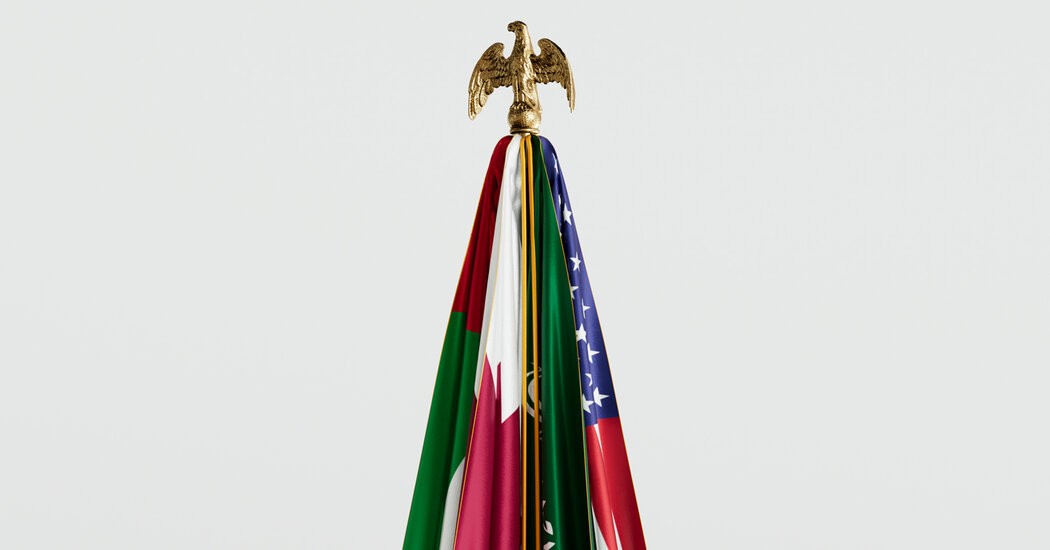
The relationship between the United States and the United Arab Emirates (UAE) is undergoing a fundamental transformation. What was once a predictable, transactional arrangement—oil for security —is being replaced by a complex, high-stakes interdependence involving artificial intelligence, semiconductor technology, and massive capital flows.
However, recent geopolitical volatility in the Middle East has exposed the fragility of this new era, revealing that the old diplomatic structures are no longer sufficient to manage the modern reality.
A Historic Investment Meets Regional Instability
In March 2025, the UAE made an unprecedented commitment to invest $1.4 trillion into the United States. This landmark pledge, which gained further momentum following President Trump’s visit to the Gulf, targets the pillars of the future economy:
– Artificial Intelligence (AI)
– Semiconductor manufacturing
– Clean energy
– Next-generation infrastructure
While this was hailed as a historic economic milestone, the geopolitical landscape has since shifted dramatically. Following an uneasy ceasefire in the Iran war, the Gulf region is grappling with severe economic disruption. With Iran targeting energy infrastructure and the Strait of Hormuz, and the U.S. responding with a naval blockade, the “foundation of stability” that these massive investments relied upon has been shaken.
This tension raises a critical question: Can long-term economic integration survive if regional security remains volatile?
The End of the “Oil-for-Security” Era
For decades, the U.S.-Gulf relationship was defined by a simple trade-off: the Gulf provided energy stability, and the U.S. provided a military umbrella. This framework is now obsolete due to two major shifts:
1. U.S. Energy Independence: The United States is no longer dependent on Gulf oil to fuel its economy.
2. Economic Diversification: Gulf nations, led by the UAE, are spending trillions to move their economies away from petroleum reliance.
As the terms of exchange change, the relationship is moving from a commodity-based pact to a strategic technological partnership.
A Deepening Web of Interdependence
The connection between the two nations extends far beyond simple trade figures. While the UAE has been the top destination for American exports in the Middle East for 17 years—contributing to a $23.8 billion trade surplus for the U.S. in 2025—the real integration is seen in culture, education, and technology.
Institutional and Cultural Ties
The relationship is woven into the fabric of daily life and institutional growth:
– Education: New York University maintains a full campus in Abu Dhabi, while thousands of Emiratis are educated at U.S. universities.
– Healthcare: The Cleveland Clinic operates a major presence in the UAE.
– Culture: The Guggenheim is currently developing a museum on Saadiyat Island.
The Technological Frontier
Perhaps most importantly, the two nations are becoming co-architects of the digital future. The partnership between the Abu Dhabi-based tech firm G42 and American giants like Microsoft —which has committed $15.2 billion to AI infrastructure in the UAE—exemplifies this. The U.S. Commerce Department’s approval of advanced Nvidia chip exports to G42 underscores that these collaborations are viewed as vital to American national interests.
Conclusion
The U.S.-UAE relationship has outgrown its traditional diplomatic architecture. To thrive, the partnership must move past ceremonial investment announcements and embrace a more honest, sophisticated framework that recognizes the UAE not just as a source of capital, but as a critical strategic partner in global technology and stability.