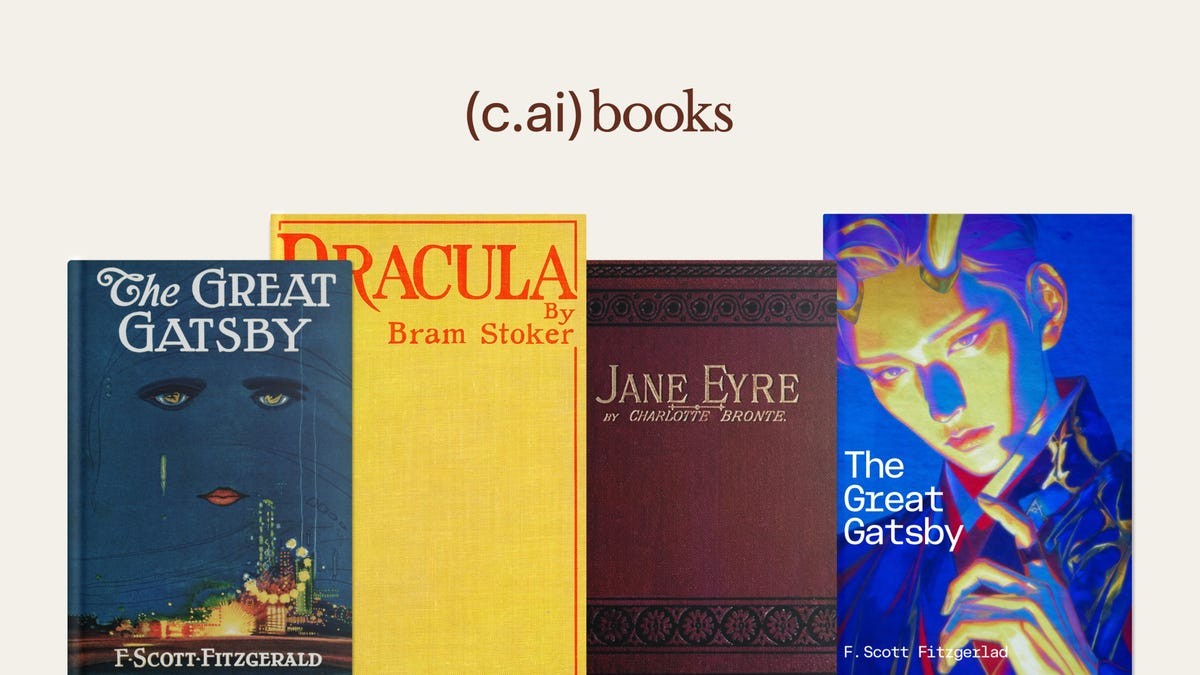
Character.AI is shifting its focus from open-ended conversation toward structured, narrative-driven entertainment. With the launch of a new feature called “Books,” the platform is allowing users to step directly into the worlds of classic literature, transforming passive reading into an active, immersive role-playing experience.
From Reading to Role-Playing
The new feature moves away from the standard “chatbot” model, where users engage in free-form dialogue, and moves toward guided storytelling. The launch includes over 20 public-domain titles, such as:
- Alice in Wonderland
- Pride and Prejudice
- Dracula
- Frankenstein
- Romeo and Juliet
- The Great Gatsby
By leveraging AI, the platform allows users to inhabit these stories, either as established characters or as entirely new personas.
How the “Books” Feature Works
Users can navigate the literary worlds through two primary modes: Story Modes and Alternate Universe Remixes.
1. Story Modes
This mode is designed for those who want to engage with the existing narrative structure of a book. It offers two distinct paths:
– Book Arc Mode: Users follow the original plot of the classic text, experiencing the story as it was written.
– Go Off Script Mode: Users can deviate from the original storyline, creating their own unique narrative branches.
– Future Update: The platform plans to introduce TapTale, a guided mode that provides prewritten prompts to help drive the story forward for users who prefer more direction.
2. Alternate Universe Remixes
For those seeking more creative freedom, the Remix feature allows users to fundamentally alter the setting or tone of a classic. This enables scenarios such as setting Alice in Wonderland in outer space or reimagining Elizabeth Bennet as a modern-day romantic comedy protagonist.
A Strategic Shift Toward Safety and Structure
This move toward structured, narrative-driven content appears to be a strategic pivot for Character.AI. In recent years, the platform has faced significant scrutiny regarding the safety of its open-ended chat functions.
Following lawsuits involving Google and Character.AI regarding the emotional impact of chatbots on minors, the company implemented sweeping policy changes. Most notably, users under the age of 18 are now barred from using the platform for open-ended chats.
By pivoting toward “Books,” Character.AI is transitioning from a platform of unpredictable, unscripted interactions to one centered on contained, literary frameworks. This shift likely aims to provide high-engagement entertainment while minimizing the psychological risks associated with unregulated, free-form AI conversations.
This evolution marks a transition for AI companies from providing “digital companions” to providing “digital playgrounds,” where the boundaries of the interaction are defined by established stories rather than unpredictable algorithms.
Conclusion
Character.AI’s new “Books” feature transforms classic literature into an interactive sandbox, offering users a way to inhabit famous stories through structured role-play. This move not only enhances user engagement but also aligns with the company’s broader efforts to provide safer, more controlled AI experiences.