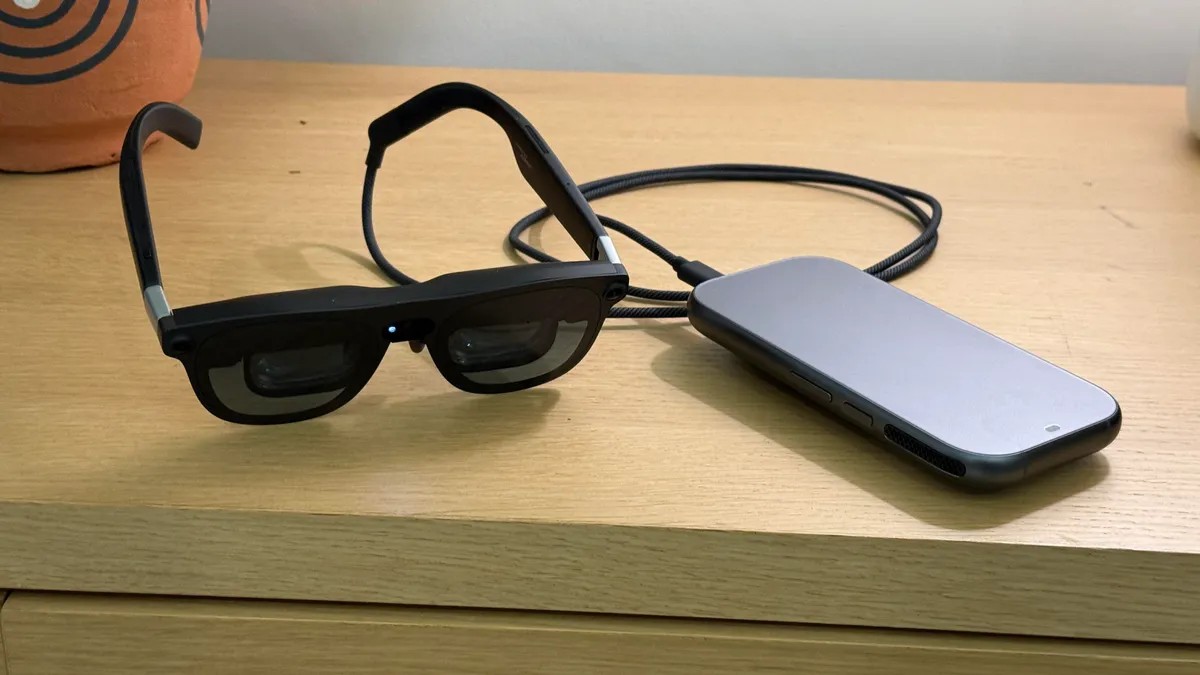
Back in May. I demoed the Project Aura glasses. They’re better called Xreal Aura now. Arriving this fall.
The experience felt powerful. Like proper VR, but squashed into a frame of glasses that clicks onto a phone-sized puck. But here’s the twist. That little processor puck isn’t just adequate. It’s packing a chip strictly superior to what’s inside the Samsung Galaxy XR. And the specs on Qualcomm’s new silicon suggest a coming wave of headsets designed to supercharge AI, right there in the frame.
The Snapdragon Reality Elite
Unveiled at the Augmented World Expo in Long Beach, California. The new Snapdragon Reality Elite is the rebranded successor to the line of chips currently humming in Meta Quests and Samsung sets. Qualcomm says the graphics performance jumps 60%. The CPU? 30% faster.
But the AI engine, the neural processing unit. That’s where it gets interesting.
A 160% boost for AI-related tasks isn’t a whisper.
This isn’t a incremental tweak. It’s a dedicated shove toward on-device intelligence. The chip can push 4.4K resolution to each eye. That is crisp. It also arrived a long time after the January 2024 launch of the XR2 Plus Gen 2. We have been waiting for a hardware leap. Qualcomm’s earlier push into wearable AI, via the Snapdragon Wear Elite for watches and smart glasses, laid the groundwork. Now it’s here in a box you strap to your head.
AI Isn’t Just a Feature. It’s the Point.
I demoed these glasses multiple times. Xreal runs Google’s Android XR OS. The integration is deep. Heavy on Gemini.
We saw real-time analysis. The “Gemini Live” mode. But it went further. Google showed us AI-assisted coding happening directly on the processor puck while wearing the glasses. Think about that. Most smart glasses today are just windows to an AI app on your phone. Passive. Dumb.
VR headsets have been even dumber. Mostly devoid of local brains. Until now.
As headsets shrink into glasses-like frames, the old way of doing things fails. You can’t have a separate phone handling the heavy lifting when the hardware is trying to look like spectacles. Xreal Aura feels like the prototype for that shift. A precursor. A signpost for where Meta is likely heading next.
Cool Down, Baby
Better performance usually means hotter temperatures. Not this time.
The chip promises 20% better battery efficiency under similar loads. And it runs cooler. Does twenty percent matter? For VR, yes.
Average runtime is two hours. Two hours. Any gain helps. But the cooling story is more vital than the battery. When your device rides millimeters from your eyeballs, you don’t want vents blowing hot air onto your retinas. Current headsets dump heat aggressively. They’re boxy. Big. These new glasses can’t be.
The silicon can handle 12 cameras and sensors simultaneously. Sounds like a lot? Eye tracking, hand tracking, room mapping, face tracking, plus video capture. The math adds up. It also supports Bluetooth 6. And Wi-Fi 7. Standard future-proofing.
Don’t Buy That New Headset Yet
Preorders for the Xreal Aura are open. $99 deposit. You get an extra $100 discount off the launch price. Final cost? Xreal hasn’t said.
This will be the first device with the Snapdragon Reality Elite. But it won’t be the last.
Bytedance’s Project Swan? Probably in there. Meta’s Quest 4? Likely in the pipeline for the next 12-24 months.
If you are hunting for a new VR headset, pause. Why rush for the current gen when this upgrade is sitting on a shelf, ready to ship? The specs are strong. The heat is managed. The AI is ready.
We will have to see if the glasses themselves deliver on the promise. But the chip. That part seems ready.