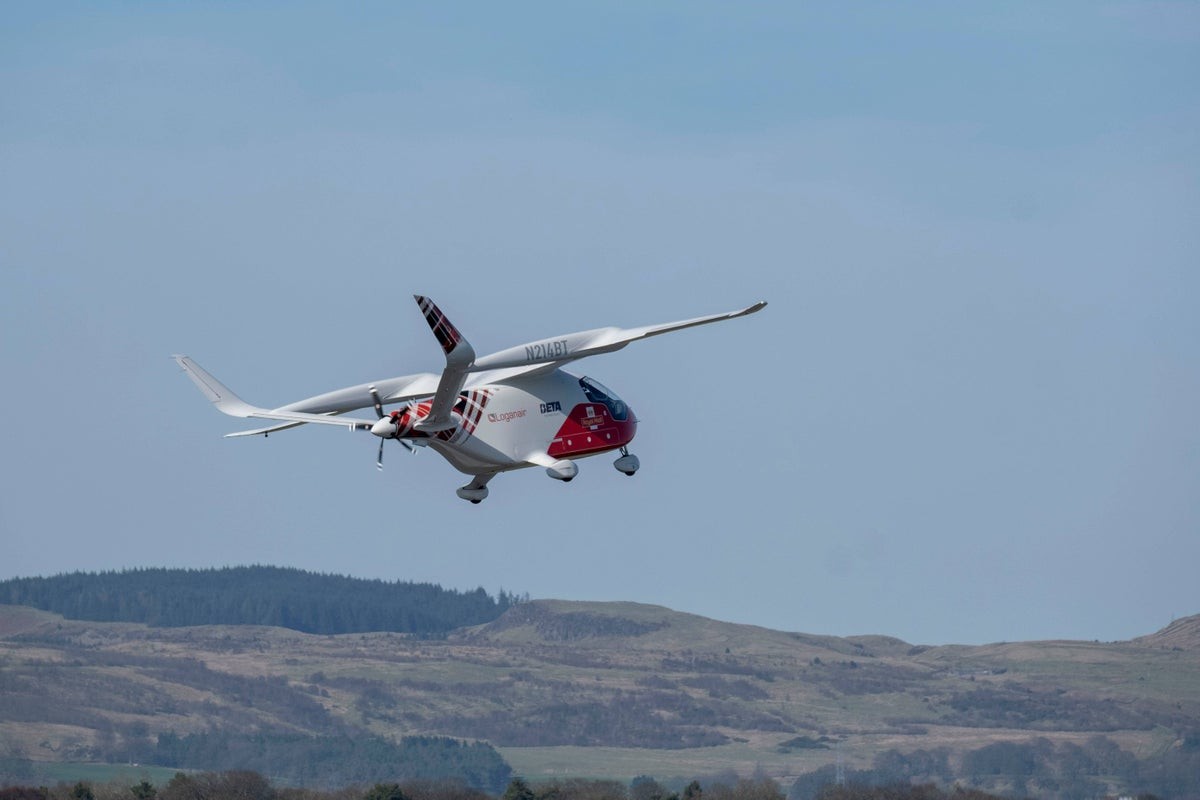
The UK has seen its first real-world demonstration of fully electric aircraft, marking a significant step towards sustainable mail delivery in remote areas. Royal Mail, in partnership with Loganair and BETA Technologies, conducted test flights across Scotland, aiming to integrate electric planes into regular postal routes. This initiative isn’t just about reducing emissions; it’s a practical solution for maintaining connectivity in communities with limited infrastructure.
Pioneering Electric Mail Routes
The demonstrations, which took place on Friday, saw the ALIA CTOL aircraft flying between Glasgow and Dundee, with further routes planned for Aberdeen, Inverness, Wick, and Orkney. The goal is to prove that electric aviation is commercially viable and can operate seamlessly alongside existing airport infrastructure. Chris Paxton, Royal Mail’s strategic insight and innovation manager, emphasized this is “an important step” toward delivering on the company’s net-zero target by 2040.
Aircraft Specs and Logistics
The ALIA CTOL aircraft is designed for practical use. It operates from standard runways, charges fully in just 20–40 minutes, and boasts a range of 336 nautical miles. Each flight can carry up to 560kg of letters and parcels, making it a viable alternative to traditional combustion engine planes for mail transport.
Why This Matters: Connectivity and Sustainability
The move is particularly relevant for Scotland’s geographically challenging terrain, where air travel remains vital for remote communities. Simon Newitt of BETA Technologies highlighted that Scotland’s “short routes, existing infrastructure, and communities that have depended on reliable air connections for generations” make it an ideal environment for electric aviation.
The integration of electric aircraft into postal services has broader implications for regional connectivity and the reduction of carbon emissions. It addresses the growing need for sustainable transportation solutions in areas where conventional methods are less efficient or environmentally friendly.
Industry and Government Support
Luke Farajallah, CEO of Loganair, described the trials as a “landmark day” for European aviation, stressing this isn’t a distant ambition but a “real tangible program.” First Minister John Swinney hailed the project as ensuring Scotland is “well-placed to play a leading role in reducing the carbon emissions associated with aviation.”
This demonstration is not simply about flying electric aircraft; it is about integrating them into a real-world commercial environment and validating their performance.
Royal Mail’s broader sustainability strategy includes 8,000 electric vans and drones, underscoring the company’s commitment to a greener future.
The successful integration of electric aircraft into postal routes will not only reduce emissions but also strengthen the connection between remote communities and the wider world. The trials in Scotland serve as a compelling case study for other regions looking to embrace sustainable aviation solutions.