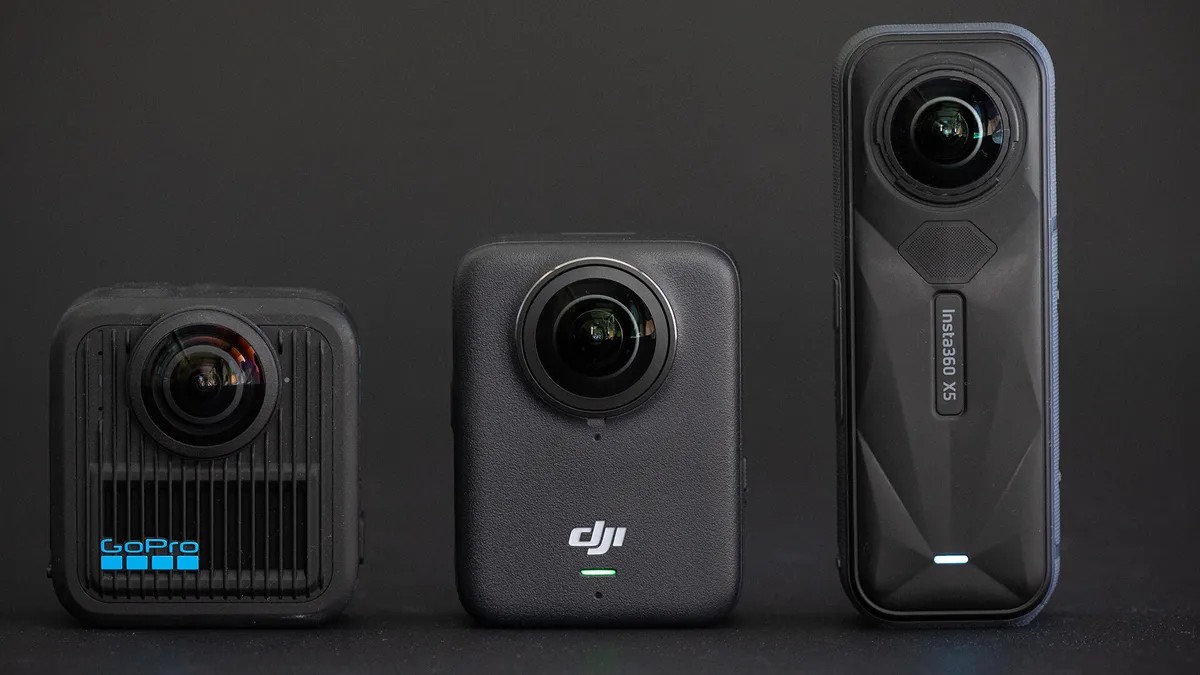
There’s no need to aim. Not really.
360 cameras capture everything at once—front, back, above, below. One click. A whole world. You can stitch it, crop it, punch in for that selfie angle where the stick just… disappears. Looks like a drone shot. Magic, mostly. Or just really good software.
I’ve used them for years. Reviewed nearly every model that hit the shelves. Here is what actually matters in 2026.
The King Still Rules
Insta360 X 5**
It barely edged out its predecessor, but the X5 is still the best. Period.
Insta360 didn’t invent the format, sure. But they own the conversation. The candy bar shape has stayed the same, but the performance ticks up every year. The Insta360 X 5** gives you 8K30 spherical video, 72MP photos, and—critically—replaceable lenses. Lenses on 360 cams stick out. They get scratched. Replaceability matters. It’s waterproof to 49 feet, too.
The X4 remains fantastic, and the GoPro Max 2 is a legitimate rival for casual shooters, but if you want the package, the X5 wins. Just don’t expect a moonshot upgrade. It’s iterative. It’s safe.
- Pros: Top-tier image quality, replaceable lenses, rugged
- Cons: Pricey, incremental over the X4
For When You Want More Detail
KanDao QooCam 3 Ultra**
Image nerds, pay attention.
KanDao finally nailed it with this one. The KanDao QooCam 3 Ultra** shoots 96MP photos and 8K30 video. Thanks to larger sensors and better optics, the detail is sharper. You get 10-bit LOG recording, which means colorists will breathe easier during post-production.
Is it perfect? No. It’s heavy. At 336g, it’s more than 50% thicker than the X5. Feel that weight on the end of a selfie pole for an hour and you’ll miss the X5. The app also lacks some polish compared to Insta360’s ecosystem.
If pure fidelity is the goal, though? This is the one.
“It rivals some cameras with much larger sensors.”
- Pros: Exceptional detail, internal storage option, LOG recording
- Cons: Bulky, heavy, app software lags behind competitors
The Mid-Range Compromise
Insta360 X 4 Air**
Odd camera. In a good way? Maybe.
The X4 Air slots between the older X4 and the newer X5. Slightly better than the X4. Cheaper than the X5. Slightly smaller, if you ignore that the difference is barely perceptible in the hand. It handles 8K30 and keeps those replaceable lenses.
If you can’t find the original X4 and don’t want to fork out for the X5’s premium price tag, the Air works. Don’t let marketing fool you—it’s not tiny. Low-light performance? Meh. It struggles like most 360s.
- Pros: Cheaper than X5, same lens benefits
- Cons: Size difference negligible, poor low-light
The Action Alternative
GoPro Max 2**
GoPro’s answer. It’s colorful. It’s vibrant. It works out of the box with zero tweaking.
Here is the trade-off: Daytime? Max 2 might actually look punchier for social feeds. Nighttime or indoors? The Insta360 X5 destroys it. The Max 2 lacks advanced editing tools and replaceable lenses. But for a beginner? Fewer menus means less confusion. You hit record, you look cool, you go home.
It’s an action-first device. It shoots 8K30 but only 29MP photos. Water resistant to 16 feet. Not as tough as the X5 if you’re jumping into deep lakes, but fine for beach runs.
- Pros: Simple interface, great out-of-camera colors
- Cons: Terrible low light, fewer editing features
The Budget Play
Insta360 X 3**
Three years old and still punching above its weight.
The Insta360 X 3** can do almost everything the X5 does, just dialed back. Good image quality, great screen, intuitive software. Low-light? Still struggles. But for someone skeptical about dropping $500-600 into 360 photography, the X3 proves the concept without the premium price tag.
If the X4 or X5 makes you flinch financially, the X3 is your entry ticket.
- Pros: Cheap relative to peers, familiar ecosystem
- Cons: Dated, X4/Air often cheaper now anyway
The Real Estate Tool
Ricoh Theta X**
Ricoh invented the category. Now it plays defense.
The Theta X isn’t about action sports or selfie-stick adventures. It’s for static shots. Virtual tours. Matterport compatibility is key here, and the Theta X remains one of the few approved options. Photo quality is solid, internal storage exists, and the device is simple.
Don’t buy it to hike Mount Hood. Buy it to sell houses.
- Pros: Compact, great for VR tours, internal storage
- Cons: Not a modern “feature” camera, feels niche
DJI’s Giant Entry
DJI Osmo 360**
DJI entered the arena with something massive. Literally.
Huge sensors mean fantastic low-light performance and rich contrast right out of the gate. We’re talking 120MP photos and 8K video at 0fps. It captures more data than anything else listed.
The catch? Compatibility issues and lack of replaceable lenses. If your lenses crack, you’re out of luck. Also, availability can be spotty. It’s capable, sure. It’s rugged, maybe not.
- Pros: Massive sensors, 120MP images
- Cons: Fragile lenses, compatibility headaches
Which one do you actually need?
This depends entirely on how you use light.
Daylight adventurer who wants the easiest workflow? The Insta360 X 5**. It handles low light reasonably well and just works.
Professional obsessed with bitrate and dynamic range? Look at the KanDao QooCam 3 Ultra**.
Total novice who hates menus? GoPro Max 2**.
Tight budget? Grab a used X 3**.
Most of these cameras shoot similar resolution specs these days. 8K30 is table stakes. The differentiation comes down to lens quality, software ecosystems, and weight. Think about what you’ll be doing. Holding a pole for an hour? Skip the QooCam. Shooting indoors at 8pm? Skip the GoPro.
Or don’t. Maybe the artifacts look cool.