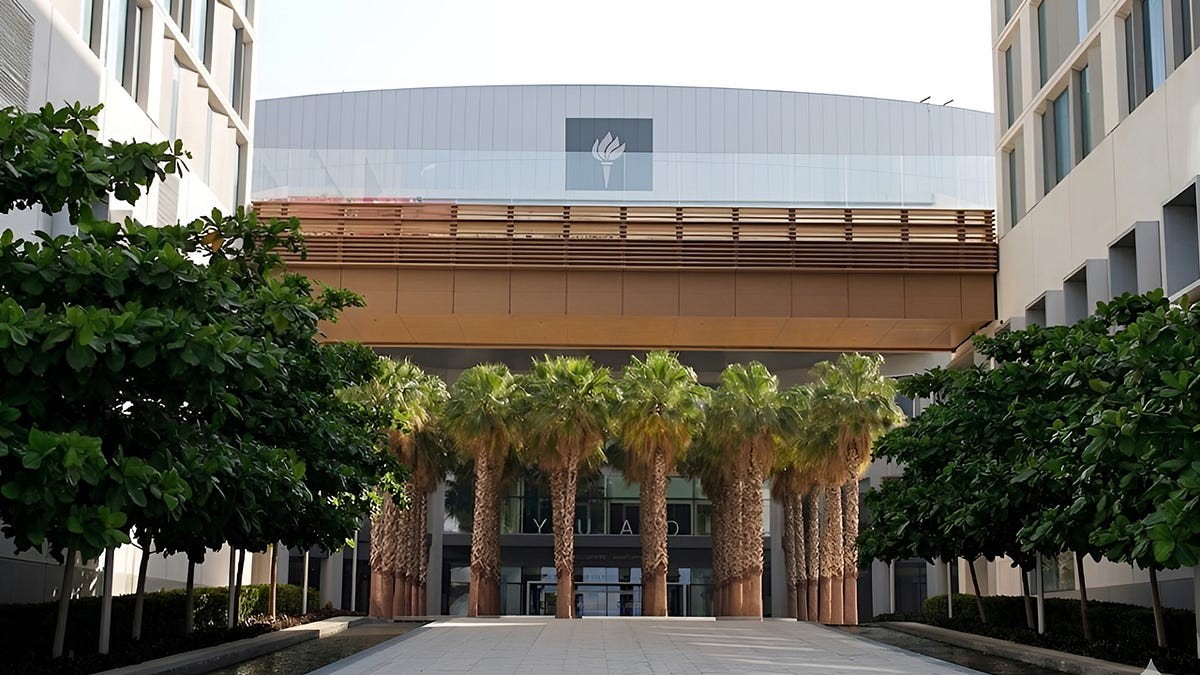
Researchers at New York University Abu Dhabi (NYUAD) have demonstrated that artificial intelligence can independently rediscover fundamental laws of particle physics, even without being explicitly taught them. The findings, published in the Journal of High Energy Physics, show that simple machine learning algorithms can extract the same organizing principles that took human scientists decades to uncover.
AI Reconstructs the Standard Model
The study fed an AI system raw experimental data from particle physics experiments conducted in the 1950s and 1960s. The AI was not given any prior knowledge of the Standard Model (SM), the established framework classifying all known fundamental particles and forces. Despite this, it successfully identified key features of the SM, including:
- Conserved Quantities: The AI independently discovered baryon number, isospin, strangeness, charm, and bottom quantum numbers – fundamental properties that define particle interactions.
- The Eightfold Way: The AI reproduced Murray Gell-Mann’s influential classification scheme, which predicted the existence of quarks before they were experimentally confirmed.
- Regge Trajectories: The system uncovered patterns between particle mass and spin, matching experimental observations, again without being instructed to look for these relationships.
Why This Matters
The ability of AI to reconstruct core physics from raw data is significant because the Standard Model itself was a monumental achievement. It required decades of theoretical insight, experimentation, and mathematical innovation. The fact that a relatively straightforward AI can arrive at the same conclusions suggests this technology could accelerate scientific discovery.
The implications are broad:
- Pattern Recognition: AI can scan vast datasets for patterns humans might miss.
- New Physics: The system could identify previously unrecognized structures that point toward physics beyond the Standard Model.
- Validation Tool: AI can serve as an independent verification method for existing theories, enhancing confidence in established knowledge.
Methodology and Findings
The NYUAD team used standard unsupervised machine learning techniques: principal component analysis, t-distributed stochastic neighbor embedding, and clustering algorithms. The AI was not provided with any prior theoretical knowledge of the mathematical tools used at the time. This means that the patterns it discovered were solely derived from the underlying structure of the experimental data.
“The fact that these are relatively standard tools in machine learning makes the depth of the physical structures they uncovered all the more significant.”
The study echoes similar results in chemistry, where AI previously reconstructed the periodic table of elements from atomic environment data. This suggests a universal ability of AI to distill scientific knowledge from raw observations across disciplines.
Current Challenges and Future Directions
The research team plans to investigate whether AI can predict the existence of quarks as building blocks of hadrons and infer gauge symmetries from quantum field theory. The ultimate goal is to move beyond reproducing known physics to identifying entirely new particles or hidden symmetries.
NYU Abu Dhabi Amidst Regional Instability
The publication of this study coincides with temporary campus closures at NYU Abu Dhabi due to ongoing regional geopolitical tensions, including the Iran-Israel conflict. Despite the disruption, the university continues research operations remotely. The study was completed before the closure and highlights the institution’s ongoing commitment to scientific advancement in the UAE.
Conclusion: The ability of AI to independently rediscover fundamental physics laws marks a crucial step toward leveraging machine learning as a powerful tool for scientific exploration. This breakthrough raises the possibility of uncovering new insights into the universe that might remain hidden from human researchers alone.