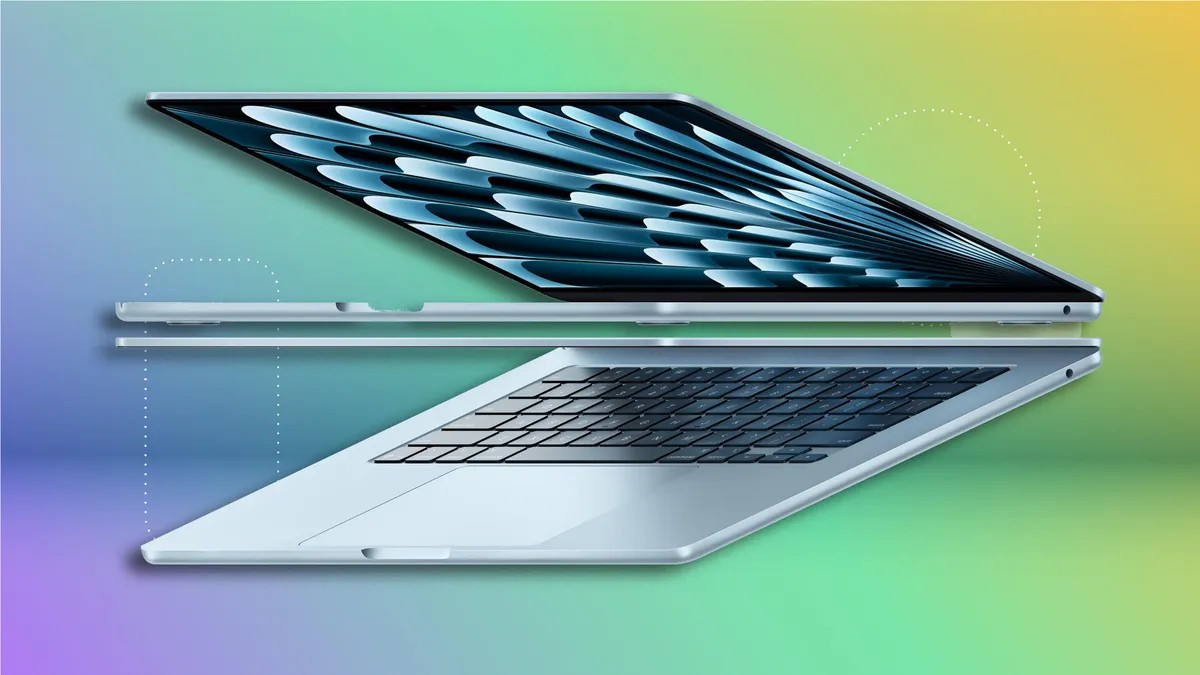
Apple’s annual MacBook refresh cycle is here, with the new M5 MacBook Air and MacBook Pro raising the inevitable question: is it time to upgrade? The answer depends entirely on your current machine. Here’s a breakdown of whether you should move from older models to the latest generation, focusing on performance gains and value.
The Intel-to-M5 Leap: An Easy Decision
If you’re still using an Intel-based MacBook, the choice is simple: upgrade now. The performance difference between Apple Silicon (M-series chips) and older Intel MacBooks is dramatic. The M5 MacBook Air offers a larger display, significantly faster processing speeds, and vastly improved battery life. The 15-inch model provides even more screen real estate for a modest $200 premium over the 13-inch version.
M4 vs. M5: Incremental Gains
The M5 MacBook Air builds upon the already impressive M4, but the improvements are evolutionary, not revolutionary. Testing shows roughly 9-18% faster performance in benchmarks like Geekbench and Cinebench compared to the M4. Battery life remains excellent across both generations.
If you recently purchased an M4 Air, there’s no urgent need to upgrade. The M5 offers minor speed boosts, but not enough to justify the cost for most users. However, if you’re choosing between the two, the M5 represents a slight advantage at a similar price point. Amazon currently offers the 15-inch M4 Air with a 512GB SSD for $300 less than the M5, making it a compelling value for budget-conscious buyers.
M3 to M5: A Noticeable Jump
The gap between the M3 and M5 Air is more substantial. The M5 delivers a 33-40% performance increase in single and multicore tests, and up to 71% faster in multicore Cinebench results. While the M3 remains capable, the M5 provides a clear performance uplift, particularly for demanding tasks.
However, the M3 chip was the first to leverage the 3nm process. Apple is likely to introduce more significant improvements with the next generation (M6) later this year, potentially including a design overhaul. If you have an M3 Air, holding out for another year might be prudent.
M2 to M5: Time for an Upgrade?
The M2 MacBook Air, released in 2022, is showing its age. The M5 offers a 59-71% performance advantage in Geekbench tests. If you own the original 13-inch M2 Air and have been eyeing a larger screen, the M5 upgrade makes sense. If you already have the 15-inch M2, waiting for the M6 might yield greater design and performance improvements.
M1: The End of the Line
If you’ve been clinging to your 2020 M1 MacBook Air, it’s time to move on. The latest models, including the affordable MacBook Neo, offer superior performance and design. The M5 or even the M4 will feel like a massive upgrade. The M1 served its purpose well, but it’s time to embrace the newer generation of Apple Silicon.
In conclusion: Upgrade if you have an Intel MacBook or an M1. Consider upgrading from M2 if you want a significant performance jump. Hold off if you have an M3 or M4 unless you specifically need the latest speed improvements. Apple’s silicon roadmap suggests even bigger leaps are coming soon.