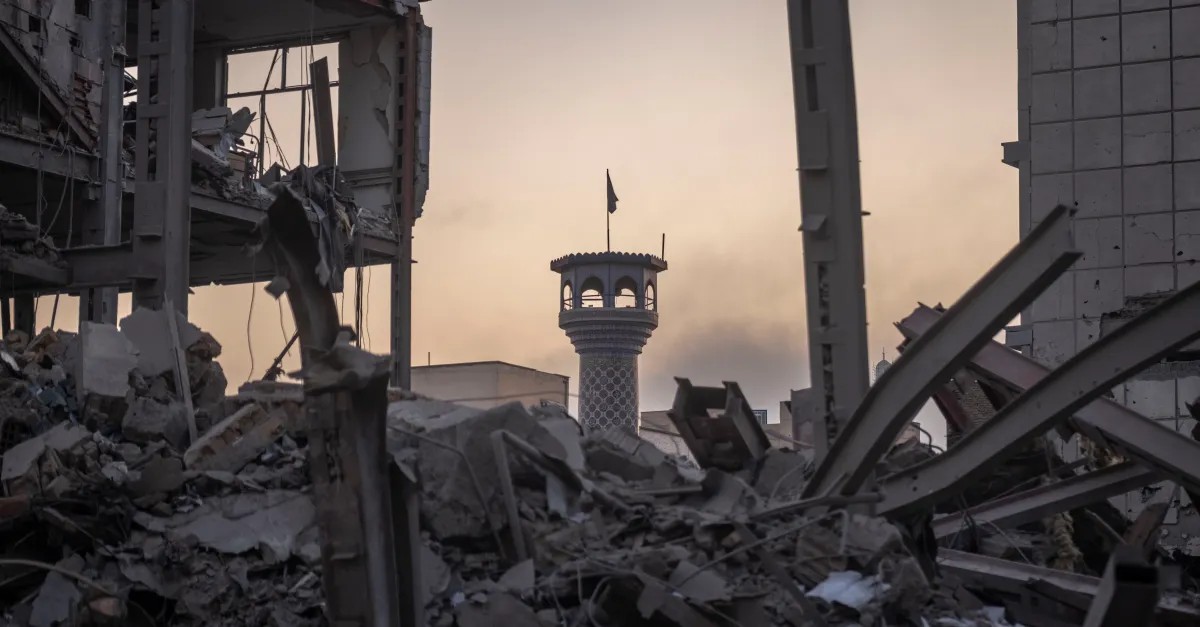
The recent escalation of conflict in Iran has trapped its people in a brutal moral paradox. Caught between a ruthless theocratic regime and the unpredictable consequences of foreign intervention, Iranians face a devastating choice: accept continued oppression or risk even greater violence. The situation is not theoretical; it is a daily reality for millions.
The Preexisting Crisis
The U.S.-Israeli strikes began at a moment when Iranians were still reeling from the regime’s own brutality. In January, security forces massacred protesters—estimated at around 30,000 killed—crushing the largest uprising in the Islamic Republic’s history. This internal violence was immediately compounded by external bombardment, creating a situation where civilians are targeted by both their government and foreign powers.
Since the 1979 revolution, the Islamic Republic has waged war on its own people, suppressing dissent through systemic violence against women, journalists, minorities, and any who challenge its rule. The January massacres were not an anomaly but the culmination of decades of repression. Now, Iranians are facing a double assault: from a regime that kills its own citizens and from external forces whose actions carry their own civilian cost.
Fractured Responses
The intervention has bitterly divided Iranians both inside and outside the country. Some see it as a necessary catalyst for regime change, believing that only external pressure can break the cycle of oppression. Others vehemently oppose it, particularly after a U.S. strike near Minab Navy Base killed at least 175 people, including schoolchildren. This incident has deepened the divide, with many questioning whether foreign intervention is worth the inevitable civilian casualties.
Those inside Iran face an agonizing dilemma. They recognize that overthrowing the heavily militarized regime requires more than barehanded resistance, but also understand that continued strikes mean further devastation with no guarantee of success. The situation is often described as choosing between setting a burning house on fire to save its inhabitants or fumigating an infested home while people remain trapped inside.
The Human Cost
The reality on the ground is stark. Suicide rates have surged as people grapple with the regime’s brutality and the prospect of further violence. One young woman, Bita, shared her fear not of death itself but of how the regime kills: “I am not afraid of death. I am afraid of them.”
Early hopes of a swift regime collapse have faded. The government, cornered and enraged, has retaliated with increased repression. Shirin, a dancer in southern Iran, described beatings, arbitrary arrests, and businesses being shut down for the crime of celebrating. Martial law has descended on Tehran, and the internet has been severed once again, leaving people in the dark—now with bombs falling above them.
Videos circulating on social media show the brutal reality: curtains billowing not from a breeze, but from the pressure of nearby explosions. What strikes observers is not the casualty numbers but the sheer nerve of those who continue filming, sending voice notes, and simply going to the corner store amid the chaos.
A Fractured Diaspora
The strike on the elementary school near Minab Navy Base further fractured the Iranian diaspora. Initial outrage over the killings quickly devolved into infighting, with accusations of warmongering and naive apologia flying between supporters and opponents of intervention. Friendships ended, and online spaces became battlegrounds as people who once marched together for “Woman, Life, Freedom” now turn on each other.
Some Iranians believe that halting the strikes now would leave the regime intact and emboldened. Others argue that the cost of continued warfare is too high, with no guarantee of success. The situation is described as an “open surgery”: a brutal intervention that may save the patient but leaves lasting scars.
The Uncertain Future
The regime is not collapsing cleanly. Internal power struggles are intensifying, with hardliners vying for control. The fear is that continued war will only empower the most violent factions, making the situation even worse. As one painter in Tehran put it, “It’s gone too far.”
The ethical dilemma remains: what is more terrifying—the uncertainty of foreign intervention or the certainty of the Islamic Republic’s brutality? No outcome leaves Iranians whole. The only certainty is that the moral residue of this conflict will linger for generations.
This is not just a geopolitical struggle; it is a human tragedy unfolding in real time. The choice facing Iranians is not between good and evil, but between two forms of suffering. The question is not whether intervention will succeed, but whether survival is even possible in a country caught between bombs and bullets.