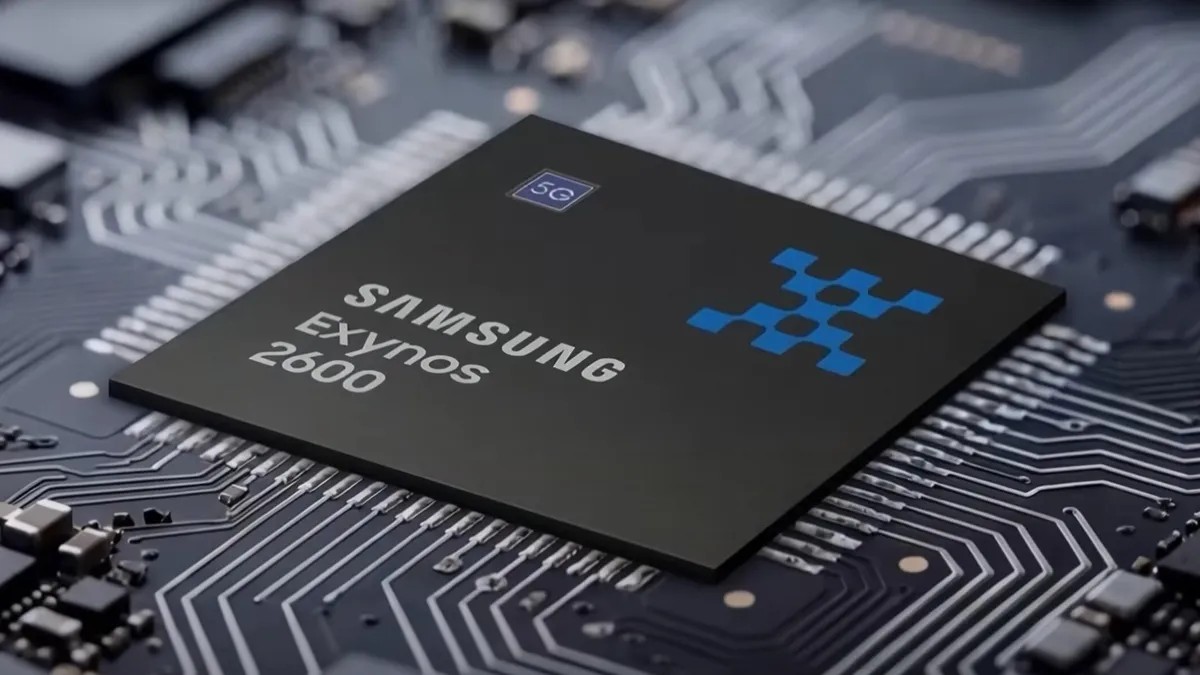
Samsung has officially entered the 2-nanometer (nm) chip production era, a move poised to significantly enhance the performance and efficiency of its upcoming smartphone lineup, including the highly anticipated Galaxy S26. This latest Exynos 2600 system-on-a-chip (SoC) integrates a CPU, GPU, and AI-focused neural processing unit (NPU) onto a single, more compact silicon wafer.
Why 2nm Matters: A Leap in Semiconductor Technology
The transition from the previously adopted 3nm technology to 2nm represents a critical advancement in chip manufacturing. Smaller chips aren’t just about fitting more transistors into the same space; they also translate to lower power consumption and improved thermal management. This means smartphones will run faster, smoother, and with better battery life—even under heavy workloads like 4K streaming, gaming, or intensive multitasking.
Samsung’s move puts it ahead of competitors like Apple and Qualcomm, who currently operate at the 3nm node. While not entirely unexpected—scaling to 2nm was the next logical step—Samsung’s success in mass production is what sets this apart.
The Galaxy S26 and Regional Variations
The key question now is whether Samsung will exclusively adopt the Exynos 2600 across all Galaxy S26 models or continue its regional strategy of using Qualcomm Snapdragon chips in certain markets. Such a mixed approach could lead to performance discrepancies between devices, depending on the underlying processor.
AI on the Edge: Privacy and Responsiveness
Beyond raw processing power, the 2nm Exynos 2600 enables a shift toward on-device AI processing. According to Mahdi Eslamimehr, an executive at Quandary Peak Research, “With 2nm chips, phones can include far more powerful AI and neural processing units that run these models directly on the device.”
This has major implications:
- Faster AI responses: Models run locally, eliminating network latency.
- Enhanced privacy: Sensitive data stays on the device, reducing reliance on cloud processing.
- Offline functionality: AI features work seamlessly even without an internet connection.
The Bigger Picture: Industry Acceleration
Samsung’s breakthrough isn’t just about its own devices. Successfully scaling 2nm chip production could accelerate the entire industry toward even more powerful and efficient mobile computing. Competitors are likely to follow, ensuring a future where smartphones become increasingly capable without sacrificing battery life.
The move towards 2nm chips is not just incremental; it’s a fundamental shift that will redefine what’s possible in mobile AI and performance.
The technology is now in mass production, according to Samsung’s semiconductor website. The full impact will be realized as it makes its way into consumer devices, reshaping the smartphone landscape for years to come.