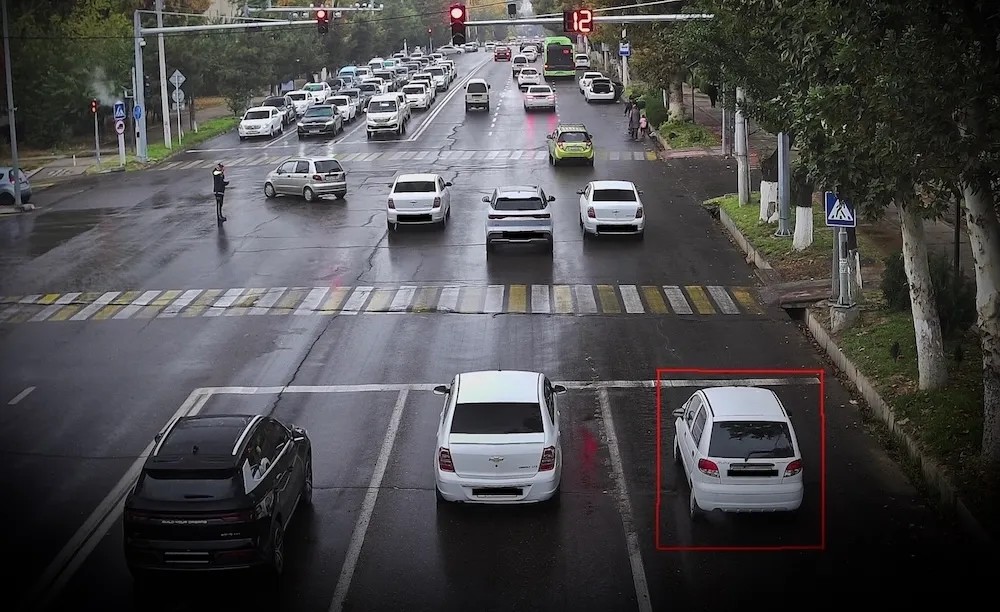
Uzbekistan operates a nationwide system of roadside cameras that continuously scans vehicle license plates and driver behavior, tracking potential traffic violations such as speeding, running red lights, and drivers not wearing seatbelts. This surveillance network, comprising roughly a hundred high-resolution cameras, collects data on millions of citizens, raising serious privacy and security concerns.
How the System Works:
The system, run by Uzbekistan’s Ministry of Internal Affairs, logs vehicle movements in real-time. Data collected includes license plate numbers, vehicle locations, and video footage of drivers and passengers. The exposed system reveals the exact locations of cameras—clustered in major cities like Tashkent, Jizzakh, Qarshi, and Namangan, but also deployed in rural areas, including disputed border regions with Tajikistan.
Security researcher Anurag Sen discovered the system exposed online without any password protection, granting public access to its database. The system was set up in September 2024, with active monitoring beginning in mid-2025. This lapse offers an unprecedented look at how national surveillance systems operate and the vulnerabilities they present.
The Technology Behind It:
The system is built by Maxvision, a Chinese company specializing in surveillance technologies, and incorporates cameras from Singapore-based Holowits. Maxvision markets its products as capable of identifying and recording “entire illegal processes” in real-time, including “passing information” about vehicles. The company exports surveillance equipment globally, including to Burkina Faso, Kuwait, Oman, Mexico, Saudi Arabia, and Uzbekistan.
The exposed database contains millions of photos and video recordings, accessible via a web-based dashboard. The system captures footage in 4K resolution, allowing operators to review violations and surrounding vehicles.
Wider Implications:
Uzbekistan’s exposure is not an isolated incident. Similar vulnerabilities have been reported in the United States, where Flock, a major license plate reader provider, left dozens of its cameras publicly accessible online. In 2019, over a hundred license plate readers were searchable on the internet, some remaining unsecured for years despite warnings from researchers.
This highlights a broader trend: mass surveillance systems are often poorly secured, creating significant risks for privacy and data breaches. The lack of basic security measures—such as password protection—leaves millions of individuals vulnerable to tracking and potential misuse of their data.
The Uzbek system remains publicly exposed at the time of writing, with no response from government officials despite repeated inquiries from media outlets. This failure to address the vulnerability raises questions about the prioritization of security and privacy in national surveillance programs.