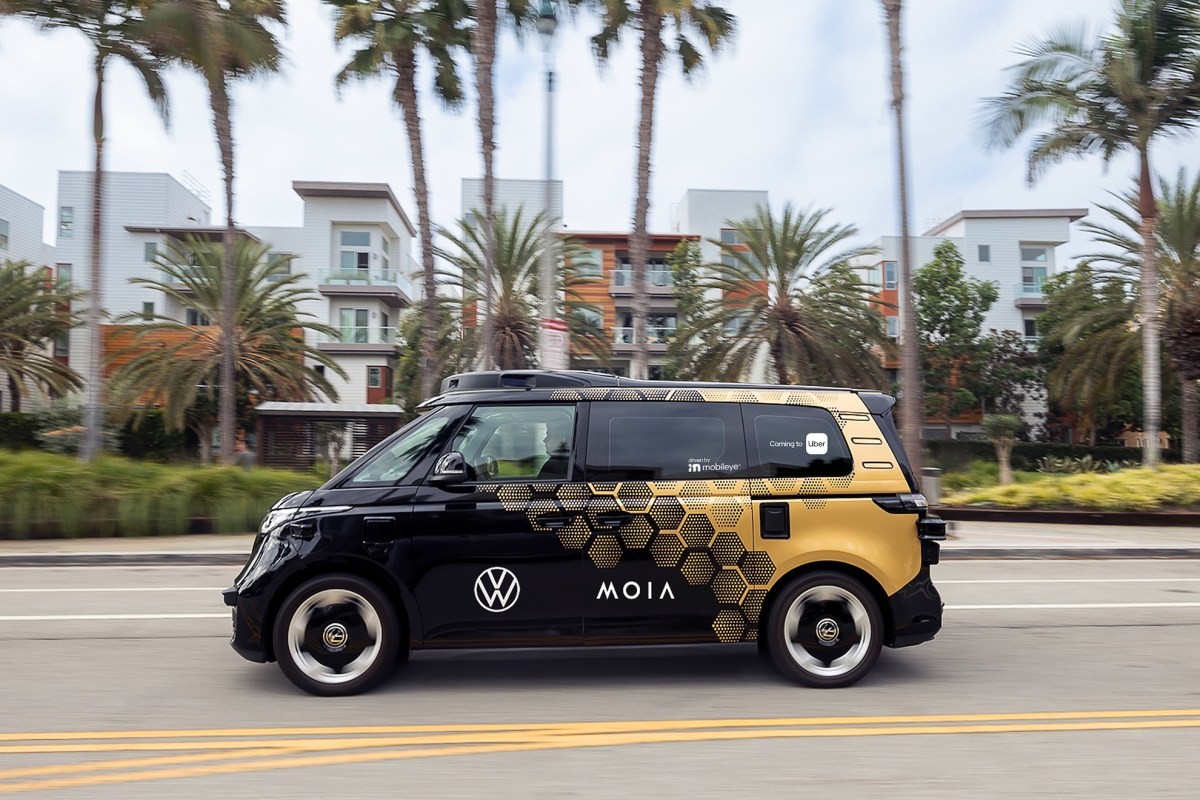
Volkswagen’s mobility subsidiary, MOIA America, has officially partnered with Uber to begin testing autonomous microbuses in Los Angeles. This move marks the first physical step in a multi-year roadmap to deploy a commercial robotaxi service across the United States, starting with the iconic electric ID. Buzz minivan.
The Rollout Plan: From Safety Drivers to Full Autonomy
The testing phase is set to begin within the next few weeks, utilizing an initial fleet of approximately 10 autonomous ID. Buzz vehicles. While the production model is designed to carry four passengers, the rollout will follow a cautious, tiered approach:
- Phase 1 (Current): Testing with human safety operators on board to monitor performance and refine software.
- Phase 2 (Late 2026): The target launch for the commercial robotaxi service.
- Phase 3 (2027): The transition to fully driverless operations, removing the need for human safety drivers.
To support this expansion, the companies have already established a joint operations facility in Los Angeles. While the initial fleet is small, Volkswagen intends to scale the operation to more than 100 autonomous vehicles in the region.
Strategic Context: Why Los Angeles and Why Now?
Los Angeles was selected as the launchpad due to its deep-rooted car culture and its history of adopting new mobility technologies. However, the project faces a complex regulatory landscape. Before these vehicles can charge passengers for rides, MOIA America must secure critical permits from two California agencies:
1. The California Department of Motor Vehicles (DMV): To regulate autonomous vehicle testing and deployment.
2. The California Public Utilities Commission (CPUC): To authorize the ride-hailing aspect of the service.
The rebranding of Volkswagen’s U.S. autonomous division from “Volkswagen ADMT” to MOIA America also signals a strategic shift. By aligning the U.S. branch with MOIA’s established European operations—which already manage ride-pooling and autonomous tests in cities like Hamburg and Berlin—Volkswagen is attempting to create a unified global brand for its autonomous mobility efforts.
Uber’s Diversified Approach to Autonomy
This partnership highlights Uber’s broader strategy of “hedging its bets” in the autonomous vehicle (AV) sector. Rather than relying on a single technology, Uber maintains partnerships with 25 different companies spanning delivery, drones, and trucking.
While Uber’s most prominent U.S. partner is Waymo, the collaboration with Volkswagen/MOIA adds a unique hardware element to its portfolio. By integrating Volkswagen’s specialized electric microbuses, Uber is positioning itself to dominate not just standard ride-hailing, but also specialized urban transit solutions.
The transition from traditional ride-hailing to autonomous microbuses represents a significant shift in urban logistics, moving toward high-capacity, electric, and driverless transit models.
Conclusion
The Los Angeles pilot is a critical litmus test for whether Volkswagen’s hardware and Uber’s software can successfully navigate the regulatory and technical hurdles of real-world urban transit. If successful, it could set the blueprint for autonomous fleet expansion across the United States.