
Let’s be honest. My laptop is fine. they get the job done. But it’s big and heavy and honestly feels like a relic from another era. If you want the king of modern mobile technology, you should consider a tablet.
These devices have evolved far beyond mere media consumers. It offers a compact, all-day battery and portability unmatched by the 15-inch MacBook Air. Of course, this concept is not new. Tablets have been around in various forms for over 20 years. But the market really exploded after Apple released the iPad in 2010. Since then, competitors like Samsung, Amazon, and Microsoft have entered the space, making tablets more powerful and visible than ever.
The appeal is clear. Tablets are fast. they are intuitive. They handle reading books, annotating notes, and casual gaming with ease. But there’s a problem. Typing on a glass slab is frustrating. The hardware is great, but it’s often locked down or limited compared to traditional computers.
This is where the best tablet accessories come into play. These are not just add-ons. They are the difference between toys and tools. With the right equipment, you can turn thin glass into a fully functional workstation. We are talking about cases that provide protection, batteries that extend the day, and external drives that restore storage capacity.
Let’s take a look at the most popular updates to make your PC life easier.
10: Cases
优化设备的第一步是保护,但并非任何情况都可以。 您需要一款能够弥补便携性和实用性之间差距的产品。 标准硅胶套可以防止平板电脑跌落,但对提高工作效率毫无帮助。 此类别中真正的赢家是对开本和键盘盒。
这些配件有双重用途。 当您上下班或旅行时,它们会屏蔽屏幕;当您需要编写电子邮件、代码或起草文档时,它们会提供物理键盘。 这听起来像是一个小细节,但在虚拟键盘上打字几个小时会导致手腕疼痛。 带支架的物理外壳也会改变您使用设备的方式。 您可以将其放在腿上或桌子上,而不是拿着它,将其变成一个合适的显示器。
选择保护壳时,请寻找耐用材料,例如皮革或硬质聚碳酸酯。 避免使用一个月后就会剥落的廉价、脆弱的产品。 您想要一些感觉很高级的东西,因为您将随身携带它。 毕竟,它是您工作空间的延伸。

Buying a high-end tablet is one thing. Living with it without destroying it is another. You don’t flaunt your new gadget like a knight without a shield, hoping for the best when it inevitably slips from sweaty hands. Scratches happen. Cracks happen. That’s why cases are more than just accessories. it’s a necessity.
The market for tablet cases is very diverse. You can choose leather that opens like a book or vinyl with a clear window that exposes the glass to the elements. If you want something that can withstand abuse, a durable hard plastic case is the way to go. Some even have a shoulder strap, so it’s easy to carry the device as a cross-body bag.
Then there are the clever ones. Apple’s iPad Smart Cover is a good example. It snaps to the side with magnets and is available in several colors. The magic is in the folds. When you fold it back, it becomes a kickstand, making it easier to type and watch videos.
But protection is only half the battle. Once the device is safe, you have to keep it alive.
9:电池组
Portable power banks are the only way to guarantee you won’t die on the road.

There is no scenario worse than watching your battery indicator hit zero. One minute you are browsing, creating, or working. The next, your expensive tablet is just a flat slab of glass and plastic. You cannot charge it. You cannot use it. It is dead weight.
But this does not have to be your reality. You can extend battery life. You can keep working through the night.
Swappable Batteries and Aftermarket Solutions
Some manufacturers still allow user serviceability. Toshiba is one of them. Their tablets often feature internal batteries that you can replace yourself. If your device supports this, you have a clear path forward. Buy an aftermarket battery pack. Keep it fully charged. When your primary battery dies, swap them out. You are back in business in minutes.
This approach works if your tablet allows it. It does not work for most modern sealed devices. But for those that do, it is the most reliable way to guarantee uptime.
External Battery Accessories
For tablets that do not allow battery swaps, look for attachments. Many devices have docking stations or portable battery packs that connect via USB or other access points. These add capacity. They extend your runtime significantly.
The trade-off is portability. You are carrying more stuff. A dock adds bulk. A separate battery pack adds weight. The solution depends on what you are willing to lug around. Do you need all-day power for a commute? Or just a few hours for a coffee shop session?
The market is flooded with options. Pick the one that fits your workflow. Not every accessory is worth the space in your bag. Test it first.
Next: What happens if you have to do some heavy-duty typing, but you’re finding the tablet screen inadequate?
Accessory Keyboards

Tell me the truth. Tablets are portable and powerful tools, but they can be terrible at typing.
You can buy a smooth on-screen keyboard that pops up when you need it. They look decent. They work okay. However, it lacks the tactile feedback of a true mechanical switch. There is no click. There is no resistance. Just glass and finger.
Try to write a 500 word report. You’ll be slower. You’ll make more typos. It feels like writing on a sticky note.
Fortunately, the industry is aware of this problem. Many tablets now support external keyboards. Some are connected directly via a base station or cable. Some people rely on Bluetooth to keep their devices clean and without wires.
Let’s take the Asus Eee Pad Transformer as an example. It didn’t just sell a tablet. It sold a solution.
The dock has a full-sized keyboard. Secure the tablet in place. Suddenly, what you’re holding in your hand isn’t glass. You have a netbook. Hardware changes. The usability jumps. price tag? This accessory alone costs about $150. That’s cheap for getting desktop-like productivity back.
But hardware is only half the equation.
When you start creating content in a netbook-style setup, you need a place to put it.
7: Tablet Hard Drives
这就是事情变得有趣的地方。 而且很复杂。

The tablet’s biggest weakness isn’t its processing power or battery life. The interior is cramped. Unlike desktop computers and laptops, which often have large spinning hard drives, tablets use flash memory to save space.
This compromise creates a storage limit. Of course, the top-of-the-line iPad 2 has 64 GB of storage. This sounds like a lot until you fill it with HD movies, a huge photo library, and local game files. Compared to traditional hard drives that can hold hundreds of gigabytes, 64GB disappears quickly.
So how do you get out of your digital prison?
Expand your storage space using external drives
The answer is simple. Get an external hard drive for your tablet.
For example, the Sahara Slate tablet supports external storage solutions, which narrows the gap between portability and capacity. It is never locked to the internal flash memory. You can buy an 80GB drive for around $70. If you need more space to store your media archives, a 250GB device can cost upwards of $400.
There is something here for every budget. You don’t need to delete apps to make room for new apps. Just plug it in.
While most people think of tablets as a secondary device (great for reading, browsing and casual gaming), some people want a true all-in-one computer. You need instant access to all your files, all your documents and all your backups. The tablet hard drives makes this possible. They turned a delicate sheet of glass into a viable primary computer.
However, even unlimited storage has another physical limitation to consider.
Changing the Angle: Tablet Stands
Your tablet is great. It’s light. It’s responsive. But it’s designed to lie flat.
当你需要打字一个小时时会发生什么? 或者躺在床上看电影而不用扭伤脖子? 把它放在腿上并不总是舒服。 将其靠在杯子上是不稳定的。
这就是平板电脑支架的用武之地。它们不仅仅是道具,更是道具。 对于那些计划将平板电脑放在一个地方超过五分钟的人来说,它们是符合人体工程学的必需品。 支架可将屏幕抬高至视线水平。 它可以稳定设备。 它将玻璃景观变成了功能齐全的工作站。
If you are serious about using your tablet as a primary device, storage is only half the equation. You also need to change the geometry of how you interact with it.
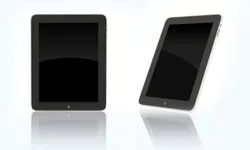
High-resolution screens are now standard on most tablets, making them the perfect device for watching movies. However, watching the movie with the screen staring blankly at the ceiling is uncomfortable. Position is important here. Support your device when viewing content at eye level or hold the device in a more ergonomic position for typing and browsing.
The market for iPad stands is surprisingly large. You can find simple stands that collapse into a pocket or flexible arms that can be bent into almost any shape. Some units are tall enough to replace a small monitor or television. There’s also a novelty option in the shape of a 1980s Macintosh computer that lets you slot the tablet into the monitor’s slot.
“Invest in a tablet stand to keep your device upright and transform it from a passive tablet to an active viewing station.”
5:平板电脑扬声器
一旦处理好视觉设置,音频就成为下一个瓶颈。 内置扬声器往往是事后才想到的,声音很小且缺乏深度。 升级到外部扬声器将体验从休闲聆听转变为沉浸式播放,将高分辨率屏幕变成真正的家庭影院核心。
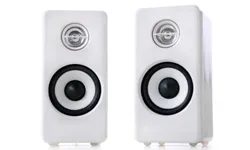
大多数平板电脑上的内置扬声器都是事后才想到的。 他们可以完成播客或背景噪音的工作,但缺乏实际音乐所需的冲击力。 如果您将平板电脑视为主要设备,则需要解决音频瓶颈。 好的外部扬声器可以完全改变动态。 无论您将设备停放在哪里,它们都能将安静的客厅变成舞池。
Choosing the Right External Audio
Connecting these speakers depends on the age and design of the tablet. There are usually three options.
First is the wired approach. If your device has a 3.5 mm audio jack, you can connect standard speakers to it. It’s reliable, has no lag, and doesn’t require a mating dance.
Another is Bluetooth. This is the leading standard for modern wireless audio. You have freedom of movement, but you have to deal with the battery life of the speaker itself.
Third is the docking station. Some high-end speaker systems support tablets directly. This way you can charge your device in a vertical position while playing. A space-saving solution that can also be used as a stand.
The market is crowded, so choosing the right one is important. For example, Altec Lansing offers a wide range of options. A basic plug-in speaker can be purchased for around $30. They work. It doesn’t sound amazing, but it works. Meanwhile, the company’s premium Bluetooth models cost nearly $200. A higher price means much better sound reproduction, deeper bass and clearer treble. In music-centric settings, this investment is often worth it.
平板电脑壁挂支架
音频只是等式的一半。 对声音进行排序后,您需要一个放置平板电脑的地方。 将其固定在墙上会改变您与硬件交互的方式。 它成为一个固定物,而不是一个松散的物体。 本节介绍将平板电脑永久固定到垂直表面所需的硬件。

We already know that tablets are a media asset. It has a high screen resolution and enough battery life to last a whole season without a power supply. So it’s an obvious candidate for movie night. But what if you don’t have to hold them? Or carry them around?
Attaching the tablet to the wall is a move that pays off both in home entertainment environments and in professional presentations. You get a solid, unobtrusive display that looks purposeful rather than haphazard.
The hardware landscape used in the installation vary widely. You will find a small, almost invisible plastic brackets that barely holds the device in place. On the other end is a sturdy built-in docking station that looks like a corporate boardroom.
Consider Vogel’s RingO system as an example. This product is popular among people who value aesthetics. The design uses a hard case with a round cutout that snaps onto a wall-mounted peg. It is very stylish. It doesn’t protrude much from the wall. It just sits there and it’s ready to go.
“Wall mounts provide a solid, unobtrusive display that looks intentional rather than makeshift.”
Interestingly, the same engineering principles apply to mobile setups as well. Vogel also manufactures tablet car mounts. These lock the tablet in the headrest facing the back seats. Turn your long journey into a portable cinema for your passengers.
Quick safety note: Do not use your tablet while driving. Passengers can watch, but drivers must be aware of road conditions.
But for business owners, wall mount is just the beginning. There is a more specialized category of accessories that can turn a tablet from a passive display into an active business tool.
3: Tablet Point of Sale
The transition to mobile commerce has changed the way small businesses handle transactions. Many retailers are using tablets as their primary point of sale (POS) instead of bulky cash registers that take up valuable counter space.
This isn’t just about replacing the old machine. It’s all about functionality. Tablet-based POS connects directly to payment processors, inventory databases and customer relationship management tools. It can provide business owners with real-time information about sales, inventory levels and customer preferences at checkout.
Why is this important for everyday users? Because it speeds up checkout. Digital receipts are now possible. It enables personalized recommendations based on your purchase history. For business owners, it reduces hardware costs and maintenance headaches.
The hardware itself typically includes a rugged case designed to withstand drops and spills, as well as a built-in or attached receipt printer. Some setups also have a barcode reader that plugs directly into the tablet’s charging port.
This is a significant upgrade from previous standalone credit card terminals. The tablet becomes the center of the entire transaction process.

Running a business means processing payments. This is inevitable. The majority of restaurant and retail sales take place through traditional card terminals, but the situation is changing. Tablet accessories for processing credit cards are becoming more and more popular. This is no longer just a niche market.
These devices are called POS systems. You can think of it as the hardware you use to swipe your card. Tablet Kiosk offers a low-cost solution for businesses using Windows-based tablets. Connect via USB port. It provides a practical bridge between traditional payment processing and mobile data processing.
With the iPad, the options expand considerably. There are several POS systems available for iOS. Many of these solutions include specialized applications. These apps handle retail checkout. It also tracks sales data. This integration enables a powerful mobile device to revolutionize business. Turn your simple tablet into a complete financial center.
But before you set up payments, consider the hardware itself. The tablet has a delicate screens. They are fragile. Next, we will look at the accessories designed to protect the glass.
2: Tablet Screen Protectors
###

Modern tablets are dominated by touchscreens that mimic the interaction model of smartphones. But this glass surface is fragile. A scratch doesn’t just affect aesthetics; it can disrupt touch sensitivity and affect the user experience. Protection is not optional. It’s essential.
Clear plastic Screen Protectors
For most users, clear plastic film is the most cost-effective solution. These films attach directly to the screen and protect it from abrasions. Prices usually range from $5 to $20. Some versions have an anti-glare coating to reduce reflections in bright environments, such as outdoors or near windows. This makes it easier to use the screen in different lighting conditions.
Protective cases with integrated screens
In intensive use, stronger protection is needed. The case with a clear plastic display cover offers a comprehensive solution. These cases often allow for touch input without having to remove the cover, which maintains the convenience of use. In addition to screen protection, they also provide structural integrity.
Should You Add a Pen to Your Tablet Computer?
The next section examines whether a stylus enhances the tablet user experience.

我们都看过历史书。 苹果牛顿。 掌上电脑飞行员。 那时,如果你想使用平板电脑,就需要手写笔。 它不仅仅是一个配件;它是主要界面。 这些设备严重依赖手写识别和手势控制,将屏幕变成数字记事本而不是玻璃板。
但硬件已经发生了变化。 电容屏现在在市场上占据主导地位。 那么,笔真的还有必要吗?
答案不是简单的是或否。 这完全取决于您想要做什么。
精确度和艺术控制
如果您的工作流程涉及数字艺术、素描或详细的图形设计,那么手写笔是必不可少的。 手指很宽。 他们缺乏复杂线条或小文本所需的精细运动控制。 专为记笔记和注释而设计的应用程序极大地受益于笔所提供的精确度。 您可以签署文档、突出显示电子书的特定部分,或者以指尖无法比拟的精确度绘制复杂的图表。
“如果您的工作涉及精确的动作,那么钢笔可能是您配件收藏中的绝佳补充。”
触摸屏的物理原理
To understand why special tools are needed, you need to understand how modern screens work. Most tablets use capacitive touch technology. These screens detect the body’s electrical charges. When you touch the glass, it completes a circuit.
Therefore, wearing thick winter gloves often renders your iPad or Android tablet useless. The screen can’t “see” you.
A regular pen won’t work with these screens either. They are made of plastic. They are insulators. In order for the stylus to interact with the capacitive display, it must mimic the electrical properties of the finger. This is where active styluses comes into play. Many pens have magnetic charges or special conductive tips that can trick the screen into registering your touch. Some communicate with the tablet to detect pressure and tilt, which cannot be replicated with a simple finger tap.
Who needs it?
For the average user browsing social media or watching Netflix, a pen is overkill. Your finger does the job just fine.
However, if you fall into one of the following categories, reconsider your setup.
- Digital Artists: Requires pressure sensitivity and accuracy.
- Students and Professionals: When annotate PDFs or writing meeting notes, a pen can speed up the process.
- Outdoor workers: If you wear gloves, a conductive pen may be the only way to use the device.
This technology has evolved beyond the clunky plastic sticks of the Palm era. Today’s active pens offer a nuanced experience that bridges the gap between digital and analog. They are not just relics of the past. These are specialized tools that perform specific tasks.
Do you really need it? Probably not, unless you want to create something rather than just consume content.