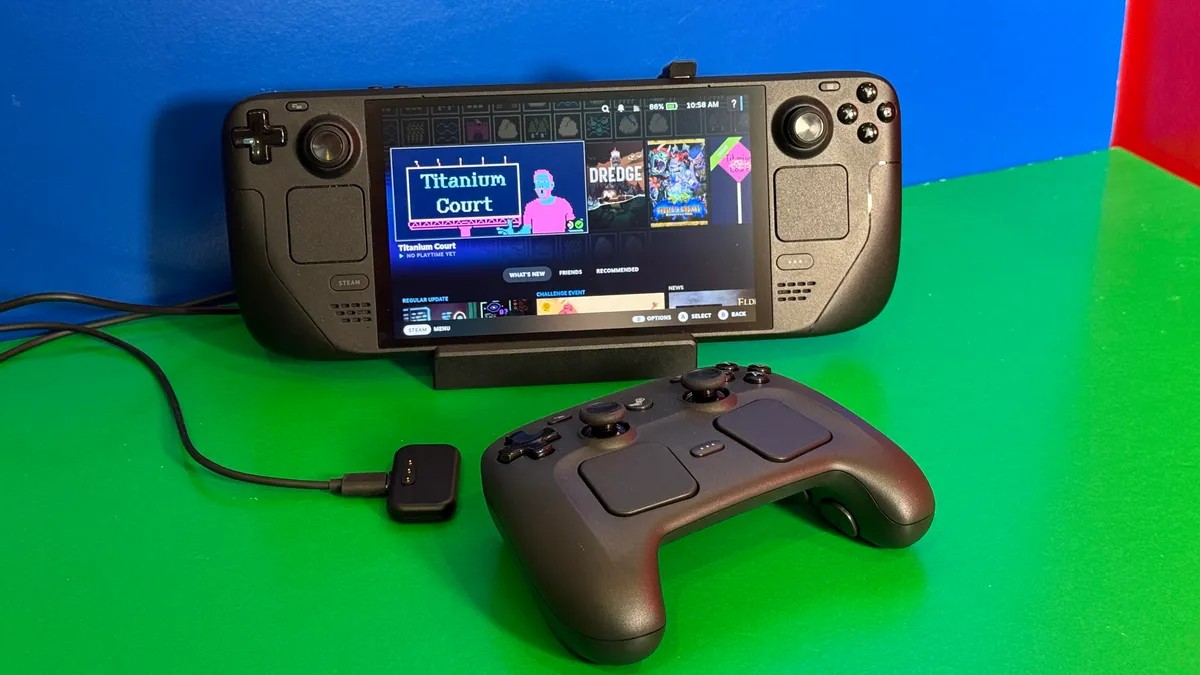
While much of the gaming world is still waiting for Valve’s highly anticipated Steam Frame VR headset and the Steam Machine console, a crucial piece of the ecosystem is finally arriving. The new Steam Controller is set to launch on May 4 for $99, offering a high-performance wireless bridge between the portability of the Steam Deck and the comfort of couch gaming.
A “Steam Deck in Your Hands”
The core philosophy behind this controller is simplicity through familiarity. Valve has essentially transplanted the control scheme of the Steam Deck into a traditional gamepad form factor.
The layout features standard dual analog sticks, a D-pad, and analog triggers, but it distinguishes itself with several advanced features:
– Dual Capacitive Touchpads: Located on the lower half of the device, these provide precision control without interfering with the ergonomics of the grip.
– Rear Paddle Buttons: Two sets of clickable, capacitive-touch paddles on the back allow for expanded input options.
– Gyro Controls: Integrated motion sensors enable tilt-to-aim functionality for supported titles.
– Advanced Haptics: The vibration system is highly sophisticated, capable of delivering everything from intense feedback to subtle, virtual “clicks” on the touchpads.
While it feels slightly denser and heavier than a standard Xbox controller, the build quality provides a premium, reliable feel that enhances the immersion of high-fidelity gaming.
The “Wireless Puck”: Solving the Latency Problem
One of the most significant technical additions is the included wireless puck. While the controller supports standard Bluetooth pairing, Valve has provided a dedicated USB-C dongle that offers a superior connection.
This puck serves a dual purpose:
1. Low Latency: It operates on a dedicated wireless channel, providing much faster response times than Bluetooth—a critical factor for “twitch” shooters and high-intensity indie games.
2. Magnetic Charging: The puck doubles as a wireless charger, magnetically snapping to the back of the controller for easy power management.
For multiplayer enthusiasts, the puck is highly efficient; up to four controllers can connect to a single puck simultaneously, reducing cable clutter during local co-op sessions.
Bridging the Gap to the Big Screen
The Steam Controller is most effective when paired with a Steam Deck OLED and a dock. By connecting the Deck to a TV, the controller transforms the handheld experience into something resembling a traditional home console, such as a Nintendo Switch or a PlayStation.
However, there is a caveat to the “complete” setup. To achieve the full living room experience, users may need the Steam Dock, which retails for $79. While third-party port extenders are available as cheaper alternatives, the official dock is designed to work seamlessly with the new controller and puck ecosystem.
The Bigger Picture: Valve’s Hardware Roadmap
The release of this controller provides a glimpse into Valve’s current hardware strategy. While the Steam Frame and Steam Machine have faced delays—partially attributed to what engineers call the “RAMpocalypse” (supply and component challenges)—Valve is prioritizing the controller to provide immediate value to its existing user base.
The Bottom Line: The Steam Controller is a specialized, high-performance tool that finally gives Steam Deck users a seamless way to transition from handheld play to a premium, large-screen living room experience.