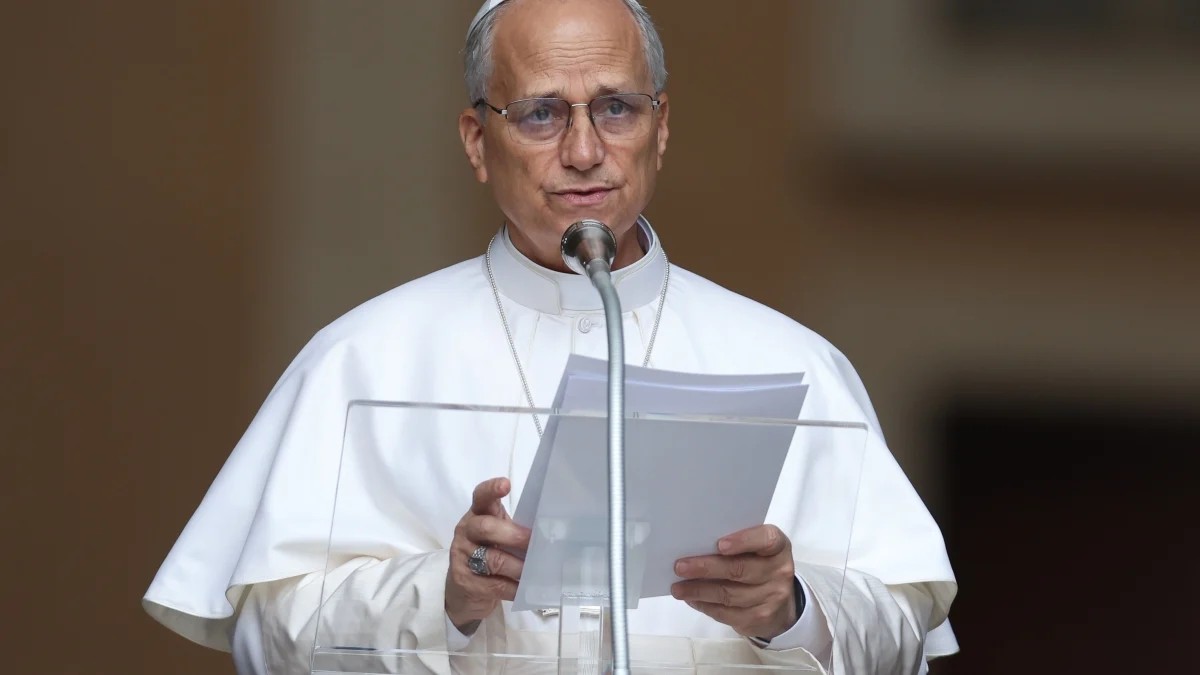
Pope Leo XIV dropped a 42,305-word manifesto on us. Or rather, on two billion Catholics. The document is titled “Magnifica Humanitas”—”Magnificent Humanity” if you need the translation. It is an encyclical, which means it carries serious weight for the faithful even if it isn’t binding canon law.
He didn’t just release it online and forget it. No, the Pope showed up personally for the presentation. Standing next to him was Chris Olah, the founder of Anthropic. It looked surreal. Like a scene from a movie that hasn’t been filmed yet.
This is the Pope’s first major guidance since taking office. And he went straight for the throat. He picked his regnal name back in May partly because Pope Leo XIII tackled the Industrial Revolution with Rerum Novarum. This Pope? He wants to tackle the algorithmic one. He sees a new challenge for human dignity and labor. So he wrote 42k words.
Why the extra drama?
“Today is just the beginning,” said Chris Olah at the event. He admitted there’s a blind spot among builders. They see what they build, not necessarily what they create. Hence, the need for “moral voices that the incentives cannot bend.” A collaboration. One of silicon. One of soul.
Here is what the Holy See is actually saying.
AI isn’t liberating labor. It’s hollowing it out.
The Church has been thinking about work for centuries. They know a thing or two about sweatshops. Leo ties “Magnifica Humanitas” directly to those earlier documents. The worry isn’t just about robots taking jobs. It’s about deskilling.
AI strips away the craft. It adds surveillance. Workers become data points rather than artisans. The Pope quotes himself—sort of—through the text, rejecting the sales pitch. Yes, automation promises “great improvements for everyone.” In reality?
“In reality, however, the ‘newways’ of working are not necessarilybetter.”
Wait, let me repeat that. The “new ways” are not necessarily better. The text warns against the seductive glow of efficiency. When work becomes mere data entry for machines, we lose something vital. No, we lose human scale. We become gears in a machine that doesn’t care if the gear breaks.
Stop worshipping the tech. Especially for kids.
The Pope called current AI enthusiasm the new Tower of Babel. Remember the bible story? Humans building a tower to reach God. God confused their language, scattered them. It was about unchecked ambition. Leo says we need to temper that drive.
He isn’t the only one worried about screens. But he frames it differently. It’s not just about screen time. It’s about the erosion of the mind. He cites psychiatric literature, clearly. Early, unsupervised digital exposure wreck’s sleep, attention spans, emotional control.
“And sometimes,” the encyclical adds, “with tragic consequences.”
He hit hard on schools. AI devalues critical thinking there. It brings a “dehumanizing force” into classrooms. We are outsourcing curiosity. That is dangerous.
“The convergence of automation… is rapidly transforming the very structure of working.”
Does this sound like a luddite rant? No, it reads more like a plea. Keep the humanity. Don’t let the tool dictate the teacher.
A “New Slavery” built on rare earth and blood.
Here is where the document gets darkest. While the Church issued a formal condemnation of the historic transatlantic slave trade, Leo simultaneously named tech manufacturing as a new form of that sin.
Read that again. New. Form. Slavery.
He points to children mining rare earth metals in dangerous conditions. Their bodies are “scarred, injured and worn.” They break rock so the servers can hum.
“This reality deeply challenges the moral conscience of our time,” the Pope writes. It challenges it because we buy the devices. We want the smooth UI. We don’t want to think about the scarred hands in the Congo or elsewhere that dug the cobalt out.
But he goes further. To war.
Leo links AI directly to modern warfare. Private companies profiting from conflict. AI systems making “lethal decisions.” He demands “the most rigorous ethical constraints” on weaponized tech. We cannot let algorithms choose who lives or dies. The temptation is to shrug. To think the problem is too big for any of us.
“A subtle temptation may emerge… namely the thought that the problemsare too bigandweare too small.”
But responsibility isn’t scaled. No one gets a pass. Not the engineer in Palo Alto. Not the bishop in Rome. Not the user in Brooklyn.
“We all have our own areasforaction.”
It is a heavy request. We are supposed to notice the supply chain. The classroom. The job market. All while scrolling our feeds. Easy? No.