The “tradwife” phenomenon—influencers who romanticize a return to traditional, domestic gender roles—has become a lightning rod for cultural debate. They are often viewed through two lenses: as women making a commendable choice to embrace family life, or as purveyors of a dangerous, regressive ideology that masks privilege and anti-feminist sentiment.
Caro Claire Burke’s buzzy new novel, Yesteryear , attempts to dive headfirst into this controversy. With a premise that has already sparked a major film deal starring Anne Hathaway, the book asks a provocative question: What happens when the curated, sun-drenched fantasy of the traditional housewife meets the brutal, unvarnished reality of the 19th century?
From Luxury Sweaters to Lye Soap
The story follows Natalie, a Harvard dropout turned high-society “tradwife” influencer. She lives a life of aesthetic perfection—until she is suddenly transported back to 1855.
The transition is violent and visceral. Natalie is stripped of her luxury goods, her nannies, and her digital audience. In their place, she finds herself facing:
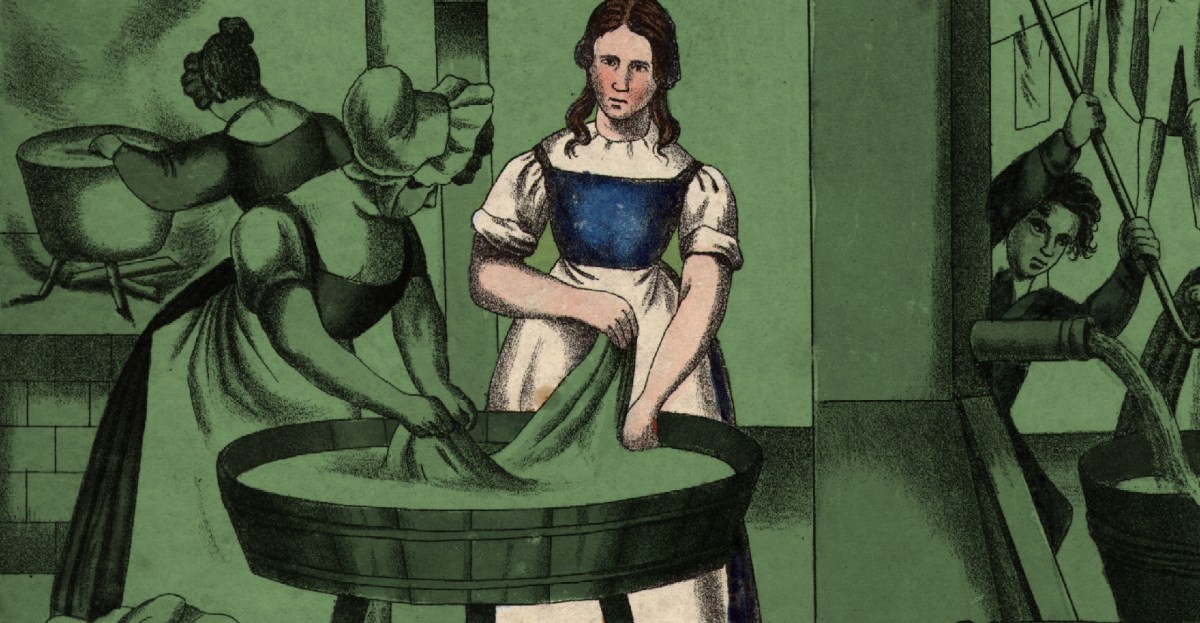
– Back-breaking manual labor, such as washing clothes with homemade lye soap.
– Primitive medicine, involving painful stitches without anesthetic and ointments that “smell like bacon grease.”
– Physical danger, including injuries from bear traps and the threat of domestic violence.
For many readers, there is a dark satisfaction in seeing Natalie’s “trad” lifestyle stripped of its filters. It serves as a cosmic “I told you so” to those who promote a lifestyle that ignores the hardships of the past.
The Hypocrisy of the Influencer
Burke uses Natalie to explore the “rot” beneath the aesthetic. The novel portrays the tradwife lifestyle not just as a political statement, but as a massive exercise in influencer hypocrisy.
Natalie’s “organic” lifestyle is a facade:
– She uses pesticides to keep her farm profitable.
– Her “pastoral-chic” kitchenware is actually drop-shipped from Taiwan.
– She harbors deep contempt for the very women she claims to represent, viewing them through a lens of superiority and resentment.
The book suggests that the “tradwife” content is a form of “rage bait”—a product designed to be consumed by people who love to hate it. Natalie herself views her followers as being “addicted” to the very rot she is selling.
A Flawed Critique: The Problem of Agency
While the novel is a gripping, thriller-paced read, it faces a significant philosophical hurdle. Burke’s central argument seems to be that tradwives are secretly just as angry and dissatisfied as the feminists who criticize them.
The novel posits that Natalie’s lifestyle is a lie she tells herself, and that she secretly desires the very things she publicly rejects. However, this creates a narrative trap:
- It denies the subject’s agency: By suggesting that Natalie secretly agrees with her critics, the book denies her the right to hold her own convictions.
- It relies on a “straw woman” archetype: Much like the internet commenters who “hate-follow” these influencers, the novel builds an imaginary, hollow version of a woman just so it can watch her be punished.
The strongest comeuppance Burke can imagine for this woman is to deny that she believes the things she appears, through all her words and actions, to sincerely believe.
Conclusion
Yesteryear is a highly engaging, bingeable exploration of modern resentment and digital facades. However, by attempting to “punish” the tradwife archetype through psychological subversion, it misses a deeper truth: one does not need to prove that a lifestyle is a lie to recognize that it is ideologically regressive. In trying to dismantle the fantasy, the novel ultimately creates a different kind of fiction—one where even the protagonist’s convictions are treated as mere performance.