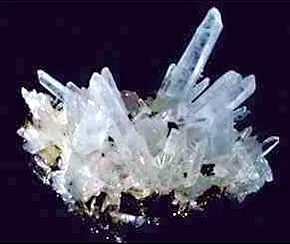
The quartz watch didn’t just arrive. It detonated.
In the early 1970s, this wasn’t just a timepiece. It was the newest high-tech gadget on the planet. Those first models were luxury items. They cost around $500 in the United States. They featured red LED displays that glowed in the dark. Today, the landscape is completely different.
Prices have collapsed. You can now find quartz watches for free in cereal boxes. The technology that once signaled status has become ubiquitous. We see rose quartz, the beautiful pink variety, in cheap beauty rollers and crystals at the supermarket. But beneath the aesthetic shift lies a fundamental change in how we measure time.
What Is a Quartz Watch?
At its core, a quartz watch uses a quartz crystal to regulate time. This is different from the wind-up mechanical watches that dominated for centuries.
The mechanical watch is an engineering marvel. Its development started in the late 14th century. Innovations over the years made these devices thinner, more reliable, and eventually self-winding. They remain impressive feats of miniature mechanics.
Traditional wind-up watches rely on a specific set of components that have existed for hundreds of years:
- A mainspring to provide power
- An oscillating balance wheel to establish the timebase
- Hands to display the time
- An enumerated dial
- Gears to transfer energy from the spring to the hands
See How Pendulum Clocks Work to understand the broader context of mechanical timekeeping. These systems are slow. They tick. They are subject to friction and gravity.
The Tuning Fork Transition
By the end of the 1960s, the industry was looking for an upgrade. Bulova took the first step. They moved away from the traditional balance wheel.
Instead, they used a transistor oscillator with a tuning fork. This watch didn’t tick. It hummed. It operated at hundreds of hertz. That is cycles per second. It was far faster than mechanical escapements.
The tuning fork replaced the balance wheel and spring. It was a single-material resonator. This reduced friction and improved stability. The battery replaced the wind-up spring. This removed the need for manual winding.
Cogs and wheels still converted the mechanical movement of the tuning fork into hand movement. But the core timing mechanism had changed. It was electronic at its heart, even if the hands were still mechanical.
The Next Logical Step
Watchmakers in the late 1960s recognized a limitation. The tuning fork was good. But integrated circuits were emerging. These were very new. Their prices were dropping rapidly. The number of transistors in these circuits was growing exponentially.
There was a clear path forward. The next step required a timing element that was even more stable than a tuning fork. It also required an integrated circuit that consumed very little power. Why? Because the watch ran on a tiny internal battery. Large batteries would ruin the sleek design.
LEDs were also new. They offered a digital display alternative to hands. The industry needed to solve two problems simultaneously. They needed a new timing element. They needed ultra-low power electronics.
The solution lay in a material property. Piezoelectricity.
The Power of Piezoelectricity
Choosing the right timing element wasn’t hard. Quartz is thousands of times better than a tuning fork for keeping time. These crystals had been around for years. The real challenge was finding integrated circuit technology that could function at low enough power.
Quartz is everywhere. It gives accurate frequencies to radio transmitters, receivers, and computers. That accuracy comes from a lucky set of physical coincidences. Silicon dioxide, which is basically sand, stays crystalline for hundreds of degrees. It ignores most solvents.
The magic happens when you squeeze it. The piezoelectric effect makes quartz generate a charge or voltage on its surface when compressed. Put a voltage on it, and it bends. Just slightly.
Imagine a bell made from a single crystal of quartz. Tap it, and it rings for minutes. Almost no energy is lost. The rate of oscillation doesn’t change with temperature. You can pick off that surface voltage with electrodes. Amplify it. Put it back in. The crystal keeps ringing.
You could make a quartz bell. It’s not ideal though. Too much energy leaks into the air. A straight bar or a disk works better. A bar keeps its frequency as long as the length-to-width ratio holds.
Modern watches use tiny bars or tuning-fork shapes. They’re often made from thin sheets of quartz. Plate them like an integrated circuit. Etch them chemically to shape.
32 kilohertz is the standard frequency for watches. It’s small. Higher frequencies need more power. Early watchmakers spent millions trying to get integrated circuits to divide down from the 1 to 2 MHz generated by disk crystals.
Good timekeeping depends on initial frequency accuracy. The angle of the cut relative to the crystalline axis matters. So does how much contamination gets inside the watch.
The electronics amplify noise at the crystal frequency. This builds into oscillation. The oscillator output converts to pulses for digital circuits. Or, if there are hands, the dividers create one-second pulses. A tiny motor drives the gears.
Precision Meets Affordability
Quartz watches changed the industry. They blend precision with durability and affordability. Mechanical watches can’t compete with the consistency of quartz oscillations.
Battery power means fewer moving parts. That boosts reliability. Maintenance drops significantly.
Horology has always loved innovation. Quartz combines traditional appeal with modern efficiency. As technology evolves, these timepieces remain a testament to that spirit.
About the Author
Douglas Dwyer founded Frequency Precision Ltd. He consults for the electronics industry. He’s been in frequency control since the mid-1960s. He has written about crystal oscillators, temperature-compensated versions, and oven-controlled models. Surface acoustic wave oscillators are another area of his expertise. Industrial fabrication technologies are also part of his work. He has been interested in the history of clocks since he started designing quartz watches.