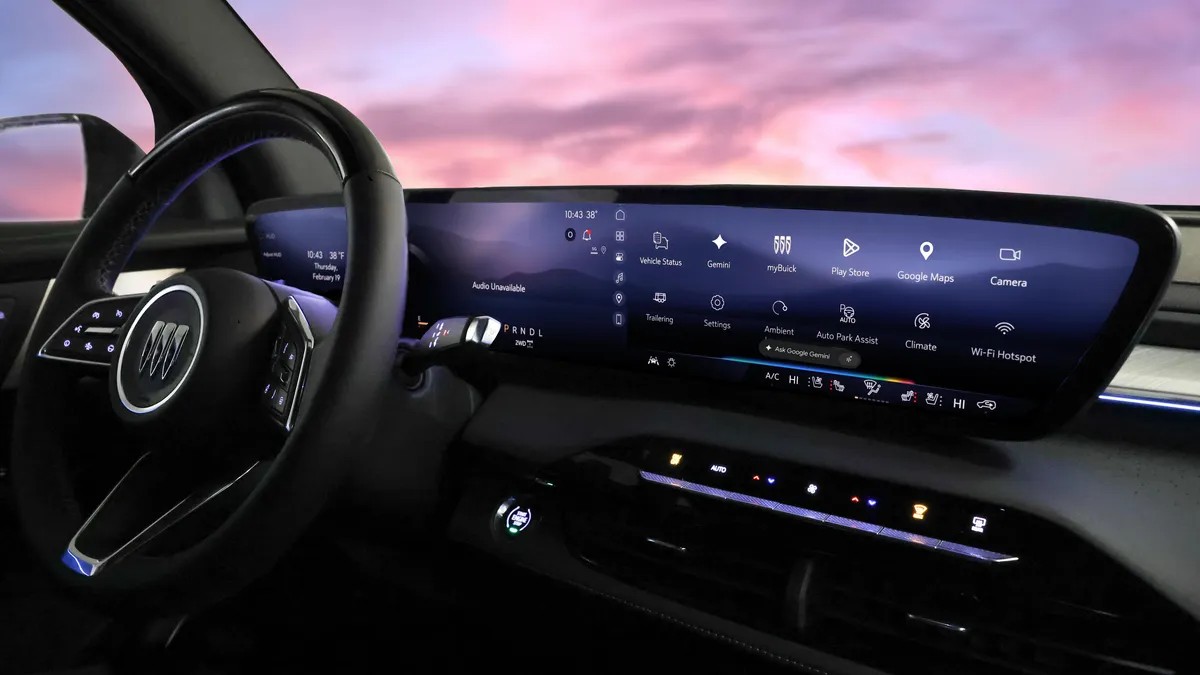
General Motors is set to integrate Google’s advanced generative AI model, Gemini, into approximately 4 million vehicles across its Chevrolet, GMC, Buick, and Cadillac brands. This significant software update targets model year 2022 and newer vehicles that already feature “Google Built-in” infrastructure, marking a major shift in how drivers interact with their cars.
The rollout will take place over several months, transitioning users from the current Google Assistant to the more sophisticated Gemini interface. This move signals a strategic pivot by automakers toward deeper AI integration, aiming to enhance convenience, safety, and entertainment while potentially reducing reliance on smartphone mirroring technologies like Apple CarPlay and Android Auto.
What Drivers Need to Know
The upgrade is not automatic for every driver; specific conditions must be met to activate the new features. Eligible vehicles must be:
* Pre-equipped with Google Built-in: This Android-based operating system was installed at the factory and cannot be added after purchase.
* Connected to OnStar: The vehicle must maintain an active connection.
* Signed into the Google Play Store: Users need an active account.
* Set to US English: The language setting must be configured accordingly.
* Opt-in Ready: Drivers must explicitly choose to upgrade to Gemini when prompted on their infotainment screen.
Once activated, users can access Gemini through three intuitive methods: voice commands (“Hey Google”), tapping the microphone icon on the home screen, or using a dedicated button on the steering wheel.
From Commands to Conversation
The primary advantage of Gemini over previous systems is its ability to handle natural, back-and-forth conversations rather than rigid, single-turn commands. This allows for more fluid and human-like interactions while driving.
Key capabilities include:
* Cost-Saving Navigation: Drivers can ask Gemini to optimize routes based on multiple stops and identify the cheapest gas stations along the way—a useful feature amidst fluctuating fuel prices.
* Contextual Assistance: The AI can locate nearby services like drive-through coffee shops or post offices, read incoming text messages, and dictate responses.
* Entertainment Control: Users can request specific podcasts, music genres, or playlists. Access to streaming apps like Netflix, Hulu, Spotify, and YouTube requires these apps to be installed via the Google Play Store.
* Vehicle Management: In a notable expansion of functionality, Gemini can provide real-time vehicle data, such as EV battery charge levels, and locate nearby charging stations. It can also adjust cabin heating and air conditioning via voice command.
The Strategic Battle for the Dashboard
This update is not merely a feature refresh; it is part of a broader industry competition to define the in-car experience. Tony Quiroga, editor-in-chief of Car and Driver, notes that GM is leveraging Gemini to create a standalone ecosystem that could eventually replace Apple CarPlay and Android Auto. These smartphone-mirroring apps are absent from some newer GM models, and the automaker appears to be moving toward a future where the car’s native system is the primary interface.
“GM clearly needs to find a replacement that gives drivers the same usefulness and ease of use,” Quiroga explained. “Auto companies are also seemingly obsessed with figuring out what the in-car experience is going to be when cars are able to drive themselves, and adding an AI interface could be part of that future.”
The stakes are high as competitors vie for dominance in the AI assistant space. Edward Loh, head of editorial at MotorTrend, identifies Tesla’s Grok as the current leader in in-vehicle AI, praising its ability to handle complex tasks like trip planning and dining recommendations. However, he acknowledges that GM and Google are “well-positioned to challenge” Tesla’s lead, suggesting that the next few years will be critical in determining which AI interface becomes the industry standard.
Conclusion
By integrating Gemini into millions of existing vehicles, GM is accelerating the transition from simple voice commands to intelligent, conversational AI assistants. This move not only enhances immediate driver convenience but also positions GM competitively in the evolving landscape of autonomous driving and connected car technologies.