
How #GPS watches are turning athletes into data-driven athletes
You might wonder what happens when you strap a computer to your wrist. It sounds like science fiction, but it already exists. Think about your workout. Do you know exactly how much effort you are putting in? Would you save time if every step, stroke of the kayak, and rotation of the pedal were fine-tuned for maximum fitness? Would you make smarter decisions or have more fun if you could look down and see accurate navigation and weather information without having to pull out your phone?
Unless you’ve been living in a cave for the past 10 years, you know this isn’t just hype. Global Positioning System (GPS) technology has revolutionized the way we move around the world. This is not magic. It is a network of 24 satellites orbiting the earth. These satellites simultaneously transmit their own signals. A receiver (in an airplane, car, cell phone, etc.) picks up these signals.
To get a fix, you need to hear from at least three satellites. Four is better. This information allows your device to calculate latitude, longitude, speed and altitude. Accuracy is usually within a few feet or meters. This kind of precision is very powerful.
Manufacturers are doing all kinds of things with this once-secret military technology. We have better navigation tools. Our cell phones send ads to our pockets based on location information. But the biggest change is sports. Companies are launching a flood of watch-sized GPS devices. Made for athletes and outdoor adventurers.
These are more than just toys. These are computers loaded with location-based data. You can now buy a GPS watch that tells you where you are on the planet within minutes of opening the box. But they don’t just say, “Hey, look where I am.” With a basic understanding of how these devices work, you can train harder and improve your performance. The future of sports isn’t coming. It’s on your wrist.
History of GPS technology

How #GPS went from a military secret to a portable necessity
The story of global positioning does not start with trendy smartphones. It started with the panic of the Cold War. When the Soviet Union launched Sputnik in October 1957, American scientists had their hands full. They need to track this new satellite, but they need to find something more important than surveillance.
Researchers at the Johns Hopkins University Applied Physics Laboratory, specifically Drs. William Guier and George Weiffenbach, listen for radio beeps coming from orbit. They noticed a pattern. As the satellite moved away from their station, the signal is stretched. The signal gets condensed as it gets closer. This was the Doppler Effect in action. By measuring the amount of frequency shift, the satellite’s orbit can be calculated.
A researcher in the same lab, Frank McClure, had an epiphany. The math works both ways. If you know the location of the satellite, you can know where you are on the ground.
“By accurately tracking satellites in known orbits and estimating the Doppler shift of the signal, people on the ground can determine their location wherever they can receive the signal.”
The US Navy adopted this idea and implemented it. By 1964, naval satellite navigation systems began actively guiding ships. It was clunky. This is military grade. But it worked.
The Shift To Signal Timing
The 1970s and 1980s were a time of increasing sophistication. The military didn’t just want to know where the ships are. They want precision. Reliability. speed.
The underlying technology is still evolving. Early systems relied on these Doppler shifts. The new system switches to triangulation based on signal timing. It’s a really simple concept. The longer it takes for the signal to travel from the satellite to the receiver, the further away the satellite is. By timing that travel, you get a much sharper picture of location.
By the 1980s, GPS had become a standard tool in all branches of the US military and its allies. Then the government opened the gates. Civilian access began.
Accuracy issues
This is where early adopters get frustrated. The first civilian GPS devices were the size of a brick. They were heavy. You carried them if you needed them. You can’t put it in your pocket.
But portability isn’t the biggest issue. Accuracy.
The military has introduced a feature called “dithering” to protect strategic interests. Dithering was intentional interference with satellite timing signals. Noise is added to the data. Unauthorized users, meaning the general public cannot decode clean signals.
result? Civil GPS accuracy is limited to about 300 feet (100 meters).
Imagine trying to navigate a city with so much room for error. You might end up on the wrong path. Or the wrong building. It wasn’t until 2000 that the US government decided to turn off the dithering.
Once that switch was flipped, accuracy soared. Suddenly GPS became really useful for everyone. You can track your speed. Find your exact location. get turn-by-turn directions without guessing.
Incredibly small GPS devices
In this way the accuracy problem is solved. The data is clean. The signal is accurate.
But how do manufacturers turn these big, inaccurate bricks into devices that fit in your wallet?
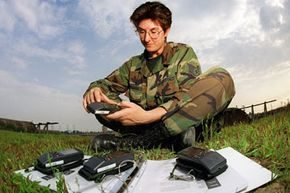
The era of vibration-free GPS is about more than just improved accuracy. It coincides with major hardware changes. Think about the laptop you use compared to the clunky machine from 1996. GPS engineers work to miniaturize electronic devices. Surface Mount Technology (SMT ) is used to solder small components directly onto the circuit board instead of relying on wires. Next is assembling the robot. This process makes the timing and signal processing chips inside GPS receivers so small that they are almost invisible without magnification.
The researchers reduced the size even further. They apply fractal geometry to antenna design. This form uses a repeating, scalable pattern to pack energy into a small space. The antenna used to be the biggest part of the package, and now it’s small enough to fit inside a smartphone case. Or a surface frame.
Early GPS watches were simply small handheld devices. Length is 2-3 inches. About 1 inch wide. Attached to the bracelet. certainly. It’s lighter than the brick-like devices of the early 2000s. But it’s still too big for the serious athlete. Running long distances with someone is painful. After training, do you drink in a cafe with big equipment? It’s not worth the trouble.
Some sports were early adopters of GPS. Golf is a classic example. It is important to know where you are in relation to the goal. Golf champion and course designer Greg Norman started consulting GPS manufacturer Inforetech in 2002. However, GPS was not widely used at the time. Consumers need two more technological steps before GPS watches become truly useful.
Make your GPS watch useful
How #GPS watches became essential training tools
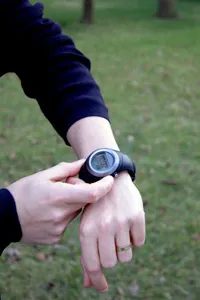
In order for GPS watches to sell well, had to stop looking like gadgets and start looking more like real watches. This change happened around 2010. By 2012, the market began to offer devices that matched the size, shape, and style of standard fashion watches. Some prototypes were tiny. Epson released a 13mm model in February 2012. This is smaller than many non-GPS sports watches.
A smaller form factor does not mean less functionality. This is where these devices go from novelty to utility. Of course it is useful to know the coordinates. But unless you’re lost in the wilderness or trying to pick the right club for a fairway you can’t see, raw location information has its limits. Manufacturers quickly realized this. They started adding features borrowed from bike computers, pedometers and heart rate monitors.
Connections are key here. Many watches sync with other devices using ANT+, a wireless protocol designed for efficiency. These external sensors capture biometrics. Heart rate data helps athletes measure exercise intensity. Shoe-mounted monitors track cadence. Bike sensors measure wheel speed and pedal force.
The watch itself collects this information. It stores it. Then plug it into a USB port or sync wirelessly. The software allows you to analyze the download. Enter basic statistics such as height, weight and age. This device becomes a precise, sport-specific tool. This is a digital training diary for the 21st century athlete.
The combination of location data and biometrics is the reason why people buy these watches. But the choices are overwhelming. In early 2012, prices ranged from $100 to over $400. That’s a lot of money. How do you pick the right one?
Match your gear to your activity
You wouldn’t buy a sailboat to run whitewater rapids. Apply this logic to your GPS watch. Before spending your hard-earned money, you need a device that meets your expected needs.
Ask yourself some basic questions. Does this watch track one or more sports? Do you want to download the data to your computer for long-term analysis? Or do you need real-time feedback on the spot? Do you venture into dangerous areas where getting lost is dangerous? Or do you stick to marked trails?
Your answers narrow the field.
a moving-map display is essential for hikers and cross-country skiers. It shows your position relative to the waypoint. But there is a trade-off. The bigger the screen, larger watches. If you just want sleek tracker for marathon splits, A bulky device might be cumbersome.
Consider the environment too. A rugged athlete (mountain bikers and skiers) may avoid using touchscreen interfaces. Trees don’t care about capacitive glass. Physical buttons won’t recalibrate after being whacked by a branch. However, runners may find the touchscreen best for quick data checks.
Manufacturers list features on their websites. You can compare specifications and prices online. But live perspectives help. Talk to staff at your local bike shop or running stores. Pester friends about their devices. First-hand tips and real-world reviews can prepare you better than any spec sheet.
Using a Useful GPS Watch

If you’re into cross-country hiking, sea kayaking, or hunting, you can’t ignore a basic GPS. These small computers are designed to transport users to and from nature without getting lost. However, don’t just believe the screen. Take a map and a compass with you. Know how to use them. Adventure legends are full of stories of GPS batteries dying at the worst possible moment. Don’t bet on survival with lithium-ion batteries.
But for runners and cyclists, its usefulness goes far beyond wayfinding. Sports and fitness enthusiasts can plan new running routes or continue their training with the help of GPS. This is just scratching the surface.
GPS watches can measure athletic performance with an accuracy previously reserved for researchers and professional athletes. Of course, it’s nice to know the time of the half marathon. But the real value is knowing exactly where you are fastest and slowest on the 13.1 mile course. Modern devices have data download capabilities that allow you to compare runs. Check out the trends. Are you lose time after Mile 10? Are you climbing the same route slower than last year?
Precision Training Logic
When these weaknesses are detected, the comprehensive features of the GPS watch provide immediate feedback. This makes your training more focused. Effective.
Cyclists often do cardio training before the start of the season. Steady work over a long period of time. Create a foundation for future sprint and hill training. Tracking “moderate pace” with perceived effort is unclear. How you feel is a variable measure at best.
Get a GPS watch that can read data from heart rate monitors, cadence sensors and wheel speed sensor.
This setting allows you to fine-tune every mile. Keep pushing within precise speed, heart rate and time limits. No need to guess. Just data.
The results can be dramatic. Although your time is limited, you can make the most of every moment. You spend less time worrying about balancing exercise, family and work. When race day comes, you know how hard you can push yourself. On the race track. On the trail. On the track.
This technology helps you train smarter. Not just harder.