The biggest variable in a home theater system is the television. direct-view sets can be purchased for as little as $300. Alternatively, you can spend thousands of dollars on a front or rear projection unit. This price is influenced by two factors. Size. Picture resolution.
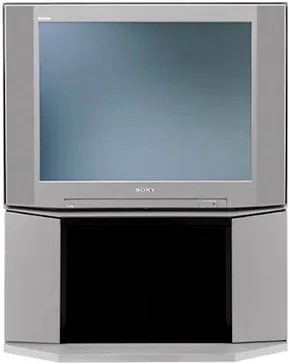
Most of us are know direct-view televisions well. They a cathode ray tube (CRT). A scanning electron gun draws an image on a phosphor-coated screen. The picture quality is very good. There is a catch. Tube technology limits the physical size. The largest direct-view screen you can buy today is 40 inches diagonally.
That is still a massive picture. a basic setup work fine. Some people are happy with 27 inches.
There is a simple rule for size. The screen should be about a third of your viewing distance. Are you sitting 9 feet away? A 36 inch screen would be perfect. These guidelines apply to standard televisions. If the screen is large or you are sitting close, the scan lines will be noticeable. The image resolution seems low. This is built into the standard TV signal. The number of vertical resolution lines is fixed. This means that each screen has a fixed number of horizontal lines. It doesn’t matter how big your screen is.
High Definition Television (HDTV) has changed the math. It has more vertical lines of resolution. When watching a video in HDTV format, you can sit close to the screen and still see a clear picture.
Why Direct-View TVs is still important for Budget home theaters
Even in the age of flat panels, understanding the limitations of direct-view helps explain why size matters. You are not just buying inches. The pixel density you purchase is related to the seating arrangement.
The 40-inch limit of a CRT is a tough barrier. You cannot get bigger. But you can get closer. Or you can upgrade to HDTV. The most important thing is to match the screen to the dimensions of the room.
“If your screen is large or if you sit close to it, the scan lines that make up the image will appear very large, reducing the resolution.”
It’s not just nostalgia. This is all about physics. Standard definitions have a certain number of lines. HDTV adds even more content. More lines mean more detail. More detail means you can sit nearer.
For now, stick to the one-third rule. It keeps the image sharp. It keeps the experience immersive.
The next step? Find the perfect HDTV for your space. But that is a problem for another time.
Direct View TV Buying Guide: Contrast Ratio and Screen Shape
Don’t worry about the solution yet. The real difference in live view settings is image contrast. You need a screen that allows you to drill down. It gives your photos an intensity when the blacks are true blacks instead of the faded grays of cheaper panels. This is the difference between a flat image and a deep image.
The curvature of the screen is the next pitfall. Avoid using bent pipes. It distorts geometric shapes and reflects diffused light like a mirror. I need a flat screen. The completely flat panel minimizes glare and keeps its shape straight. It’s not just about looks. It’s a matter of precision.
But what if you need a size? Big screen.
There are limitations to looking directly at a cathode ray tube. It will be very heavy. Spacious. Crossing a certain diagonal is unrealistic. If you are looking for a very large TV, a projection TV is the way to go. The physics of large direct view panels do not scale well.
We are working on the projector. There are different techniques. Everyone has trade-offs. The following section describes standard projection techniques.