


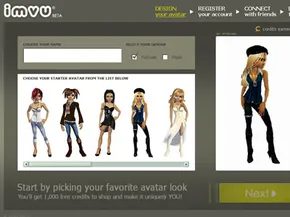
Instant messaging has been around for decades. It didn’t really catch fire for the general public until the late 1980s. America Online’s predecessor, Quantum Link, offered a user-to-user messaging system that changed everything. Later clients added file transfers, photos, audio, and video. Yet the core of AIM, ICQ, and Yahoo! Messenger remained text typed into a window.
Imagine if those words appeared in balloons floating above your head. Not your actual head. The head of a custom avatar. That avatar sits on a sofa. It hangs out with others in themed rooms. It laughs. It hugs. It dances.
This is the premise behind IMVU. Launched in 2004, it reimagined social networking through 3D graphics. While other messengers allowed for simple icons, IMVU avatars are fully animated and three-dimensional. They express moods autonomously. They interact with environments and other users in real time.
The platform calls itself a “3D Avatar Chat Instant Messenger & Dress up Game.” Customization is the hook. You don’t just chat; you curate a digital identity. The strategy works. IMVU claims over 30 million users globally. It is also highly profitable. In June 2008, monthly revenue hit $1 million. Best Buy later invested $10 million in venture capital to back the growth.
Beyond chat rooms and forums, IMVU offers blogs, image galleries, and music integration. It functions as a creative marketplace. Graphic designers can build assets and sell them directly to users. This economy drives engagement. The content keeps users coming back.
We will explore how to navigate this space. We will see why it remains a dominant force in online social interaction.


